


[Saikai Field Report] Conquer Currents & Offshore Big Squid: Maximize Your Catch by Switching Between 3 Egi Sizes
An early-October autumn eging field report from the Saikai area. Tempo-focused JetChaser size 2.5 for tidal-current spots, EgiSharp size 3.8 for big squid offshore. A pro's strategy data on maximizing the catch by switching sizes to match conditions.
Field Conditions & Situation
Area
Saikai City / Goto-nada Sea, Nagasaki Prefecture. Rocky shores and break zones with good tidal flow.
Season
The heart of autumn eging in early October. A period when everything from newborns to good-sized fish is mixed together.
Tide
Medium to spring tide. A pattern where activity rises during the dawn and dusk mazume periods.
Depth
From the 5–10 m shallows in close, out to the 15–20 m mid range offshore.
Size-Selection Strategy — Choosing by Situation
In autumn eging, switching egi sizes according to current speed, depth and target size makes or breaks your results. This time we attacked with the following three patterns.
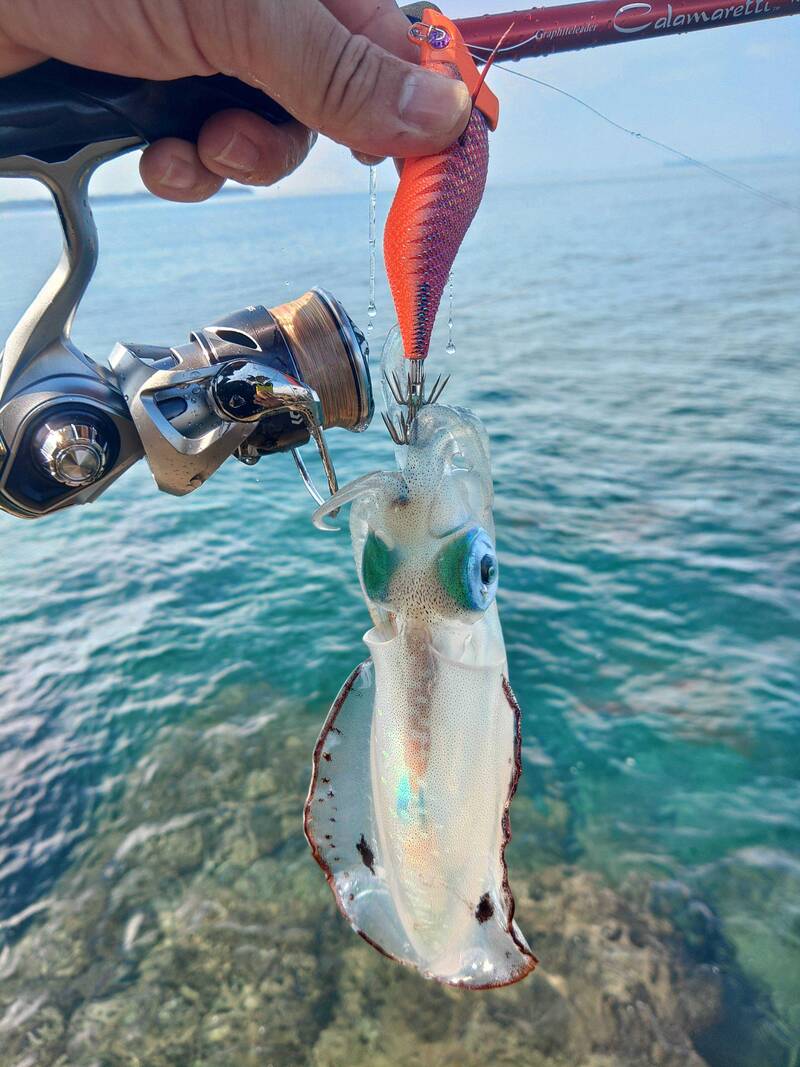
- Fast-attack pattern for tidal currents: JetChaser size 2.5 (20g) / Red Aji Orange
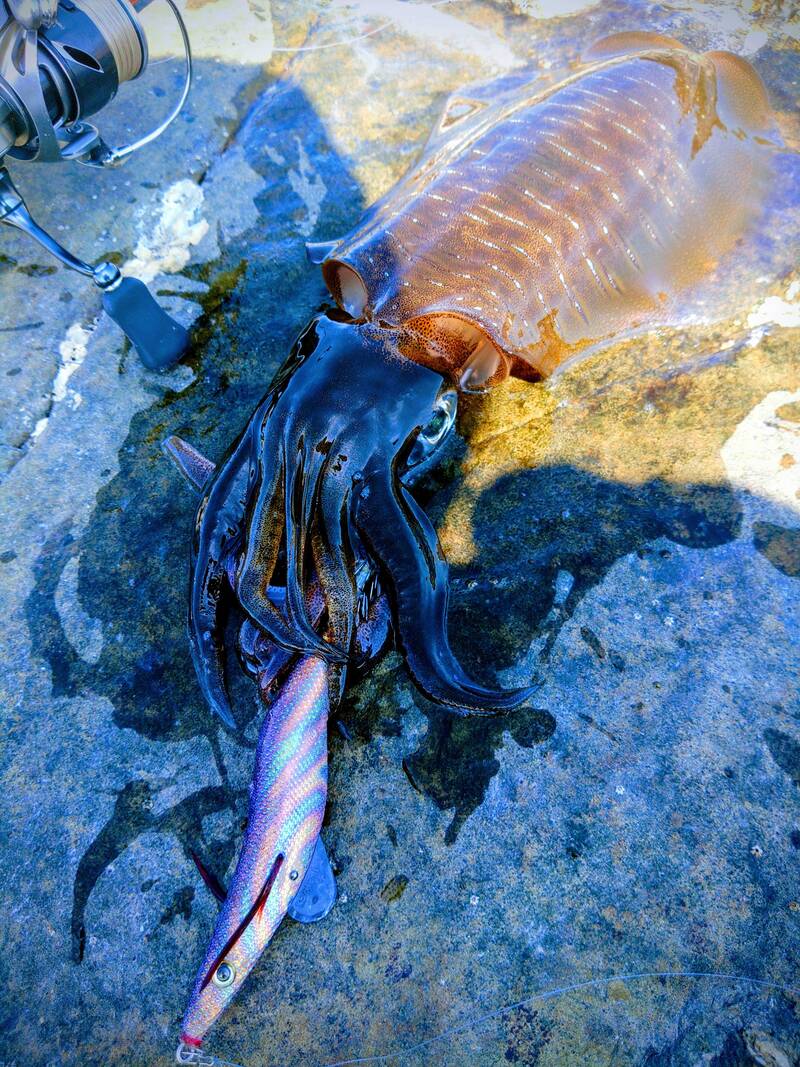
- All-round base pattern: EgiSharp size 3.5 V0+ / Goto-nada Salty Blue
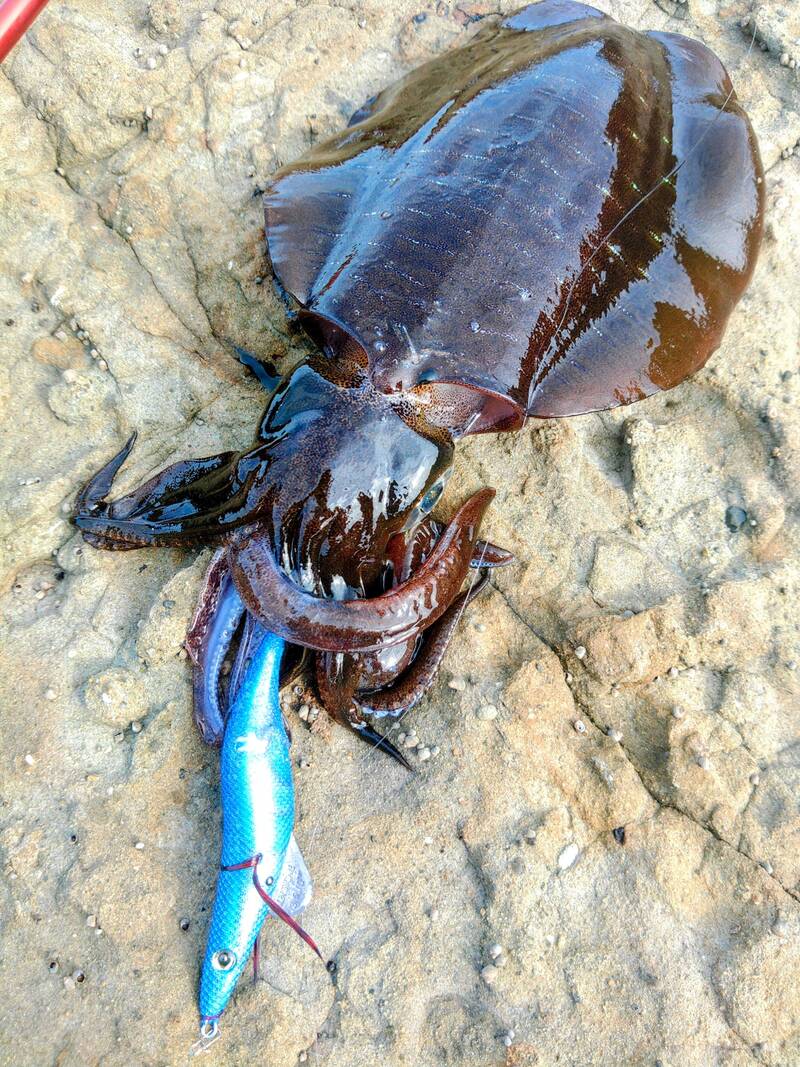
- Offshore big-fish appeal pattern: EgiSharp size 3.8 V0+ / new color Day Rock Brown
When the current runs fast, the high-density design of the JetChaser size 2.5 gets you down to the bottom at a good tempo; when the current slackens, the EgiSharp size 3.5 lets you tease the mid layer carefully; and for the deep range offshore, the size 3.8 appeals to large individuals. This three-size lineup is the go-to setup for autumn eging.
Tackle Used & Setup
- Rod: dedicated eging rod, 8.0–8.6 ft (shore tip-run capable also works)
- Reel: spinning reel, size 2500–3000
- Line: PE No.0.6–0.8 + fluorocarbon leader No.2–2.5
- Tidal-current spots: JetChaser size 2.5 (20g) Red Aji Orange
- Base pattern: EgiSharp size 3.5 V0+ Goto-nada Salty Blue
- Big-fish targeting: EgiSharp size 3.8 V0+ new color Day Rock Brown
Strategy: Changing Sizes to Match Current and Depth
Pattern 1: Fast attack in tidal current — JetChaser size 2.5
During the dawn mazume when the current is running, it is the JetChaser size 2.5 (20g)'s turn. Its high-density design means a fast bottom contact and resistance to being swept away, so you can trace along the break accurately.
For color I chose Red Aji Orange, which combines visibility and appeal power. After two or three short jerks, keep the range at bottom +1–2 m on a tension fall. High-activity individuals reacted immediately, letting me steadily build up numbers at a good tempo.
Pattern 2: All-round base form — EgiSharp size 3.5
When the current slackened and the squid rose into the mid layer, I changed to the EgiSharp size 3.5 V0+. The EgiSharp, a Keystone long-seller, excels in total balance and covers a wide range from the shallows to the mid range.
The color was Goto-nada Salty Blue V0+, strong in the clear autumn tides. Its natural blue tone makes squid bite even under high-pressure conditions, and it posted stable results.
Pattern 3: Offshore big-fish appeal — EgiSharp size 3.8
For the offshore break at 15–20 m depth, I targeted good-sized fish with the EgiSharp size 3.8 V0+. Its large silhouette and weight are strengths that let it show a strong presence even in the deep range.
The new color Day Rock Brown V0+, with its brown × gold contrast, stimulates the instincts of large individuals. By carefully working the offshore current seams, I succeeded in drawing out bites from over-1-kg-class squid.

Hit Pattern Analysis — The Best Match by Situation
Tidal-current spot (dawn mazume)
JetChaser size 2.5 / Red Aji Orange
A fast bottom contact to work the bottom at a good tempo, catching high-activity fish one after another.
Mid layer (when current slackens)
EgiSharp size 3.5 / Goto-nada Salty Blue V0+
The base pattern for steadily taking the squid that have risen up, using a natural color.
Offshore deep (big-fish targeting)
EgiSharp size 3.8 / Day Rock Brown V0+
A large silhouette and appeal color to make offshore big squid grab it, selecting for size.
The day's results unfolded ideally: numbers on the size 2.5, a stable hold with the size 3.5, and selecting big squid with the size 3.8. I truly felt the thrill of autumn eging, where switching sizes maximizes the catch.
Field Gallery


Catch Data & Summary
Total Catch
15 squid in total (size 2.5: 7 / size 3.5: 5 / size 3.8: 3)
Hit Time Windows
Concentrated in the dawn mazume 6:00–8:00 and dusk mazume 17:00–18:30
Best Colors
size 2.5: Red Aji Orange / size 3.5: Salty Blue / size 3.8: Day Rock Brown
Average Size
size 2.5: 300–500 g / size 3.5: 400–700 g / size 3.8: 700 g–1.2 kg
Summary: In Autumn Eging, Switching Sizes Changes Your Catch
The early-October field session at the Goto-nada Sea in the Saikai area, at the height of autumn eging, once again proved that switching egi sizes has a major impact on results.
During the dawn mazume with fast-running current, the high-density design of the JetChaser size 2.5 (20g) showed its power. I could work the bottom at a good tempo and efficiently catch high-activity fish.
When the current slackened, the total balance of the EgiSharp size 3.5 shone. Covering a wide range from the shallows to the mid range, it posted stable results.
And in the deep range offshore, the presence of the EgiSharp size 3.8 drew in the big squid. The appeal power of the new color Day Rock Brown V0+ has a tremendous effect on large individuals.
Rack up numbers with the size 2.5, stabilize with the size 3.5, take big squid with the size 3.8 — this three-size lineup is the optimal answer for maximizing your autumn eging catch.
Autumn Eging Size-Selection Q&A
Q. What are the benefits of switching egi sizes in autumn eging?
A. Choosing the size to match the situation can dramatically change your results. By fishing a heavy size 2.5 where the current is fast at a good tempo, using the size 3.5 for all-round work, and the size 3.8 for big squid offshore, you can take the optimal approach in each situation.
Q. Why is the JetChaser size 2.5 effective in tidal-current spots?
A. Its high-density 20g design resists being swept by the current and keeps a stable orientation. Because it can be worked at a good tempo with a fast fall speed, its efficiency in tidal-current spots translates directly into results. Appeal colors such as Red Aji Orange are also effective.
Q. How do you use the EgiSharp size 3.5 versus the size 3.8?
A. The size 3.5 is highly versatile, an all-rounder for probing a wide range from the shallows to the mid layer when the current is slack. The size 3.8 specializes in deep ranges offshore and targeting big squid. Use them by taking advantage of the differences in appeal power and fall speed.
Q. What are the key strategy points for the Saikai area in early October?
A. It is a period when everything from autumn newborns to good-sized fish is mixed together. Focus on breaks and current seams with good tidal flow, rotating sizes and colors. Activity is especially high during the dawn and dusk mazume periods, so choosing the size to match the movement of the bait is important.
Q. Any tips for rotating colors?
A. The basic order is appeal type → natural type. In murky tides and at dawn/dusk, use flashy types such as Red Aji Orange; in clear midday tides, use natural types such as Salty Blue. When the response is poor, adding a change with a new color like Day Rock Brown is also effective.