


[Late Summer, Saikai City] Conquering a 5m Shallow with Shore Tip-Run — JetChaser size 2.5 (20g) Field Report
A shore tip-run session on a natural rock shore in Saikai City, Goto-nada. Working the break along a tidal current zone with a tension fall using the JetChaser size 2.5 (20g), we hooked one high-activity bigfin reef squid after another. A full field report.
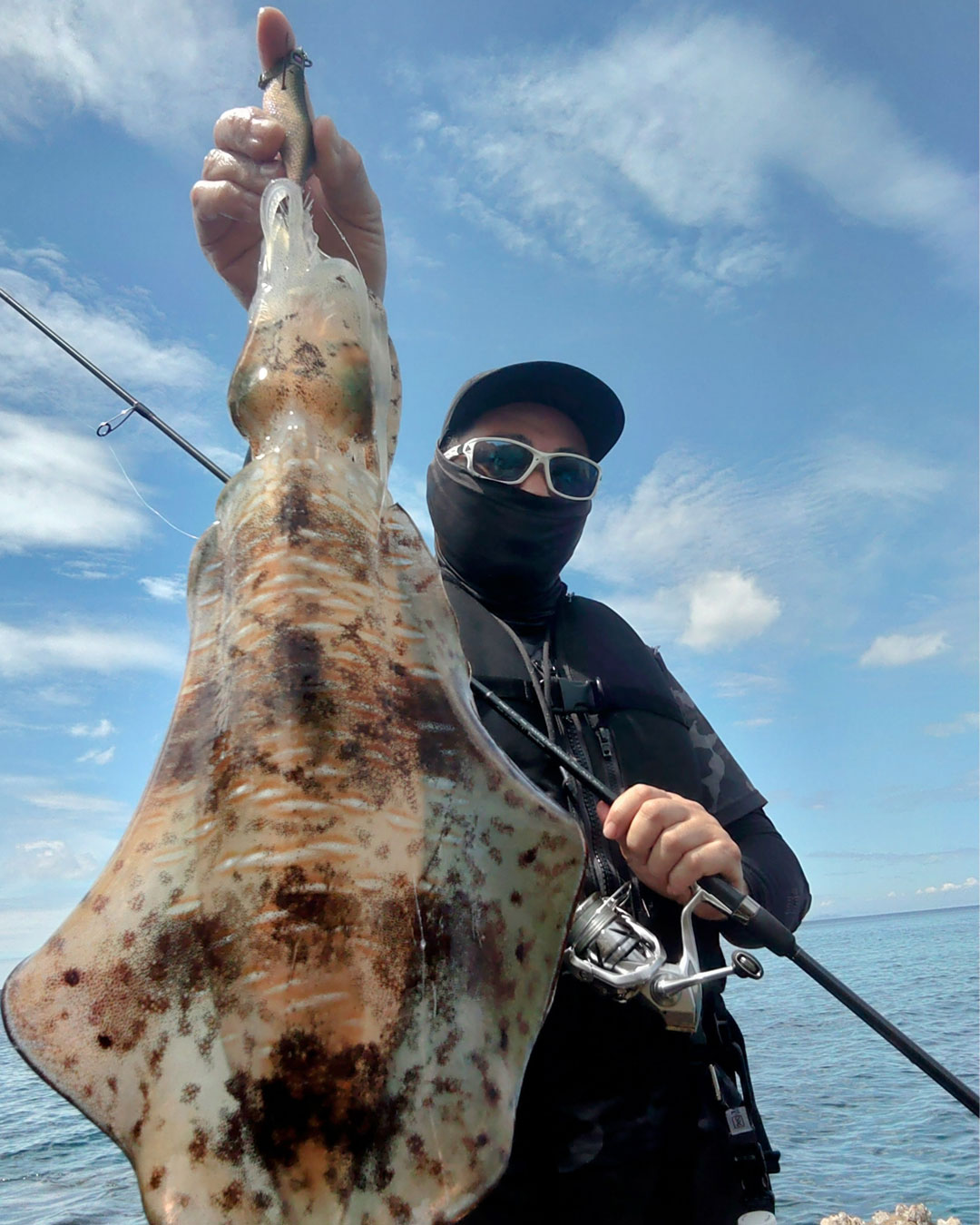
Field & Conditions
Area
Nagasaki Prefecture, Saikai City, Goto-nada. The mouth of a cove on a natural rock shore where the swell passes through.
Depth
Shallow to 5m deep. A break close in, with the point running into a tidal current zone.
Season / Time
A late-summer morning. The bite window opened right as migrating bait became visible.
Lure
JetChaser size 2.5 (20g). A high-density, low-resistance design that stays strong in wind and current.
Strategy: "Show It, Then Feed It" Along the Break with a Tension Fall
As the bait moved onto the edge, the squid rose with it and turned highly active. Cast roughly parallel to the break. After the egi hits bottom, cut the range with five or six short jerks, then keep line tension on for a tension fall. Tracing bottom +1 to 2m by managing line angle and count, the tip loaded slightly and the squid grabbed instantly. Showing the "pause" of that descent for as long as possible was the key.
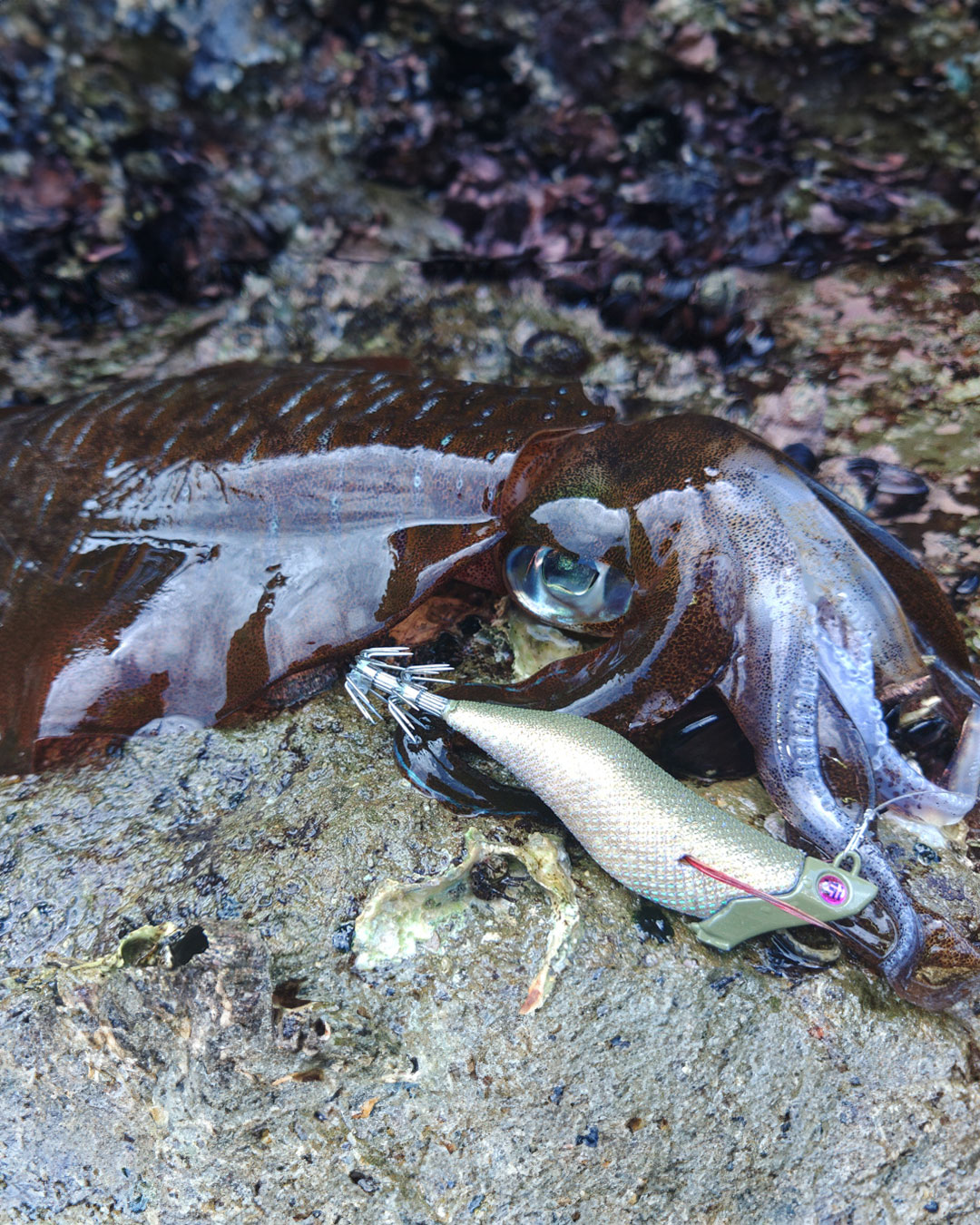
Tackle & Setup
- Rod: shore tip-run capable, 7.0–7.6 ft class
- Jet eging is possible even with a standard rod of 8 feet or longer!!
- Line: PE No.0.6–0.8 + fluorocarbon No.2.5–3
- Lure: JetChaser size 2.5 (20g) (its weapons are fast descent and orientation stability)
- Action: 2–3 short jerks → constant-angle tension fall → 1–2 second pause
Summary of the Day's Hit Pattern
Target Spot
From the seam at the cove mouth to the head of the break. Retrieve parallel to the bait's path.
Range
Keep 1–2m off the bottom. Adjust the count for current speed.
Presentation
Get the grab on the tension fall after a short jerk. Actively hook the subtle "something's off" bites.
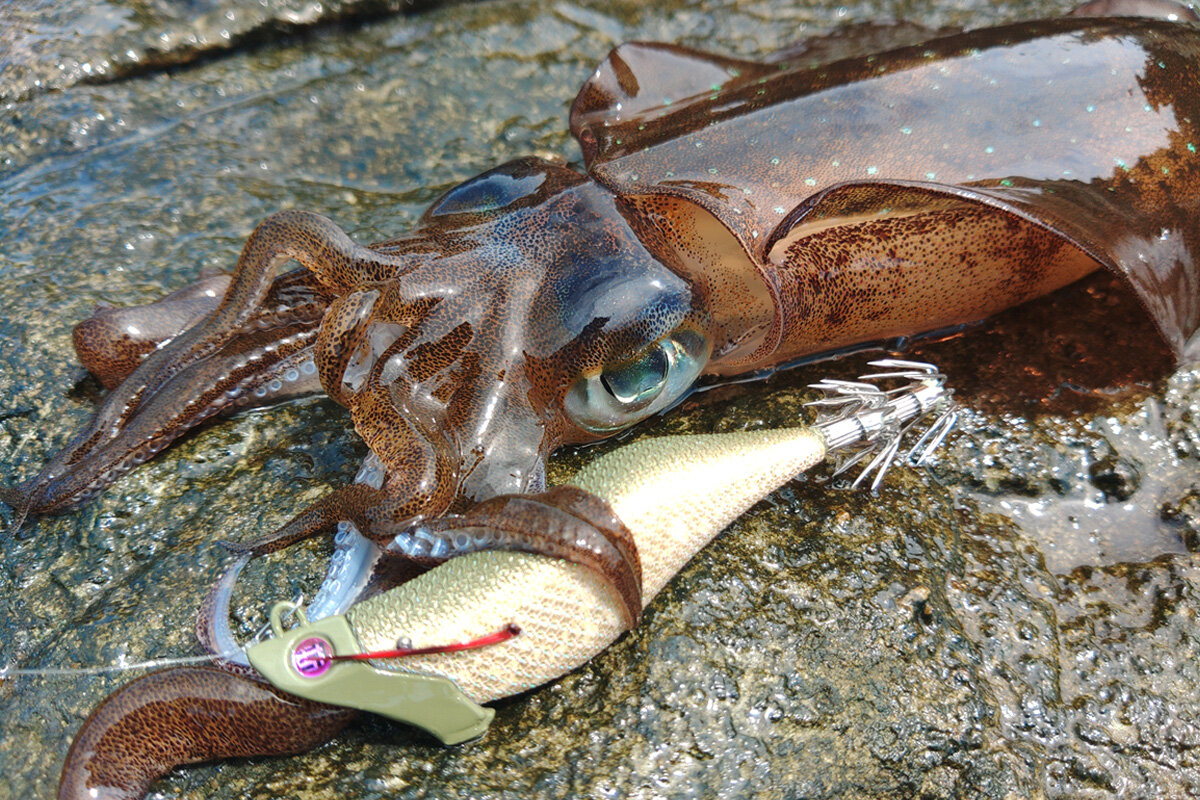
Summary: On a Shallow x Tidal Current Zone, the "size 2.5 (20g)" Combines Speed and Stability
Even in a tidal current zone like Goto-nada, fully working a 5m-deep shallow with shore tip-run is where the JetChaser size 2.5 (20g)'s stable fall and low-resistance swim give a huge advantage. In the late-summer window when the bait moved in, running the break precisely with the tension fall as our axis — that was today's answer.
See the specs on the product page
For the full approach to fishing from shore, see our guide to jet eging in autumn (shore tip-run).
Frequently Asked Questions (Shore Tip-Run)
Q. How long before you write off a spot when the current is fast?
A. If there's "no response in 5 casts," change your angle or count; if there's no response in 10 casts, rethink your standing position or line angle.
Q. What about when the wind bellies out your line?
A. Lower the rod to lay the line along the water surface, and on the tension fall make a constant angle your top priority.
Q. How do you choose between the size 2.5 (20g) and size 2.6 (22g)?
A. Use the size 2.5 (20g) for shallows and pinpoint fishing. Use the size 2.6 (22g) when searching wide, going deep, or when the current is even faster.