

Autumn shore tip-run
Depth, fast current, wind. One step deeper on bigfin reef squid, from the shore.
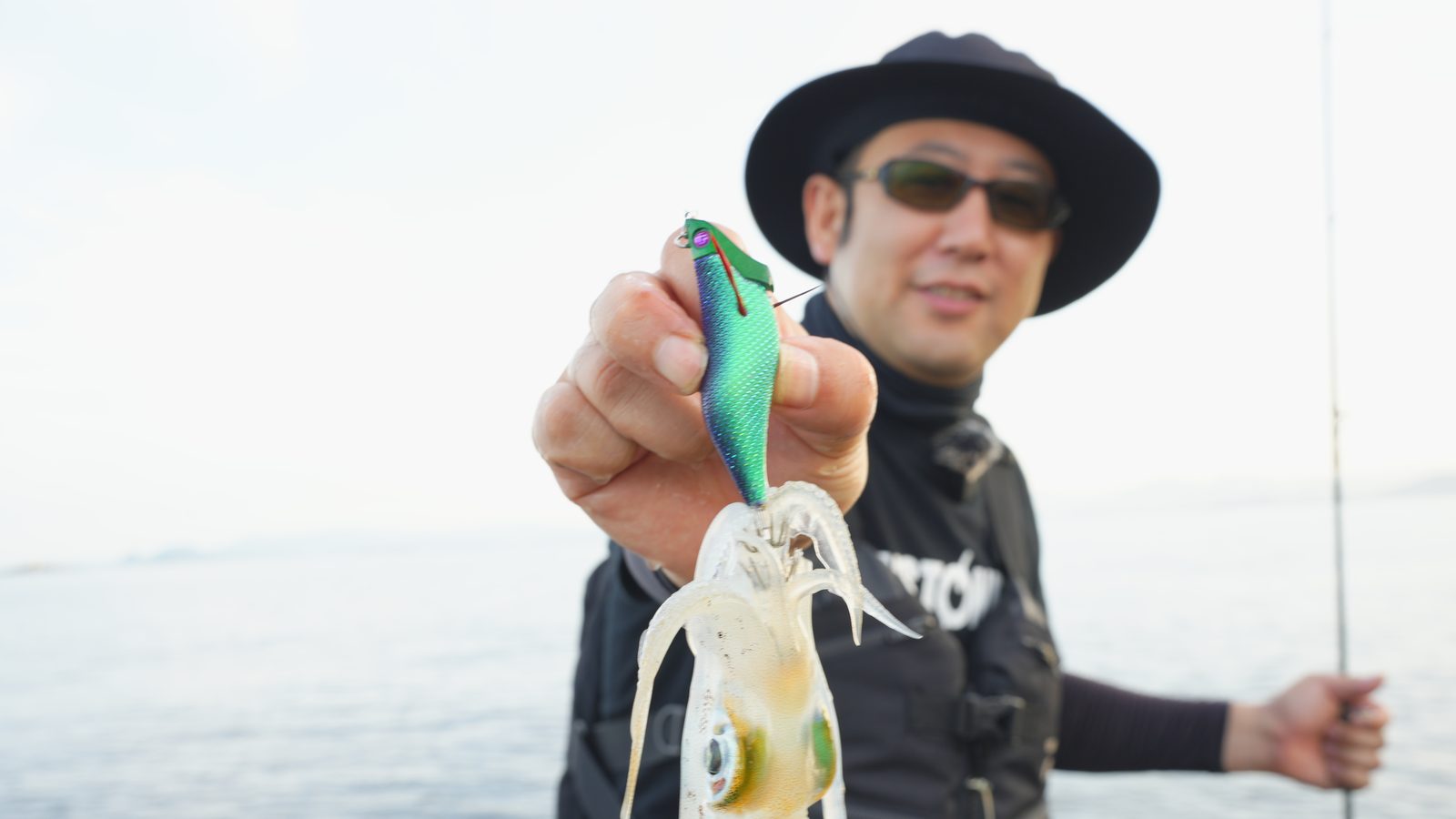
Shore tip-run is a way of casting a heavy tip-run egi from the shore and taking the bite from line tension and the movement of the rod tip. Where there is depth, fast current, or wind that makes a light egi hard to control, an egi that sinks quickly becomes a real advantage. With a JetChaser in the 20–24 g class you can use a suitable eging rod or an M-class shore rod and work the offshore break and the water near the bottom at a steady tempo. Autumn mixes this year's small squid with better fish, and lets you search actively for the ones that are feeding. This page describes a fishing style a little apart from ordinary eging: sink it fast, and show it a long way sideways.
Depth
about 10–20 m
It suits breakwaters and rocky shores with depth, and the break offshore.
Egi weight
20–24 g
The four JetChaser sizes are the core of shore tip-run.
How you fish it
Bottom once, then sideways
Instead of returning to the bottom every time, you keep the egi in the chosen band with wind-and-jerk and stay.
1. What shore tip-run is
Shore tip-run is a way of casting a heavy tip-run egi from the shore and taking the bite from line tension and the movement of the rod tip. It applies the thinking of boat tip-run to fishing from the shore.
In boat tip-run the boat drifts, the egi is held in one band of water, and the bite is read in the small changes at the rod tip. From the shore you cast a heavy egi, check the bottom once at the start, move the egi forward with the wind-and-jerk, then hold tension and let it stay.
Rather than lifting it high and repeating the fall as in ordinary eging, you concentrate on keeping the egi in one band and showing it a long way sideways.
At Keystone we call this style, fished with the JetChaser, “jet eging”. Shore tip-run is the name of the fishing itself; jet eging is the style Keystone proposes with the JetChaser.
2. Where it works
Shore tip-run shows its strength where a light egi makes the band hard to read.
Where there is depth
On breakwaters and rocky shores of about 10–20 m, the faster the egi sinks, the easier it is to hold the bottom and the band you want.
Where the current is fast
Where the current runs and an ordinary egi is swept away, a heavy egi keeps the feel of what it is doing.
Where you stand high
On a high breakwater the line angle grows steep, so a heavier egi helps you hold the band.
Where there is wind
With side wind or head wind the line bows more, and the 20–24 g class helps you control it.
On the other hand, in very shallow water, over weed, or on rough bottom, the fast sink can turn into snags. In those places an ordinary egi has its use.
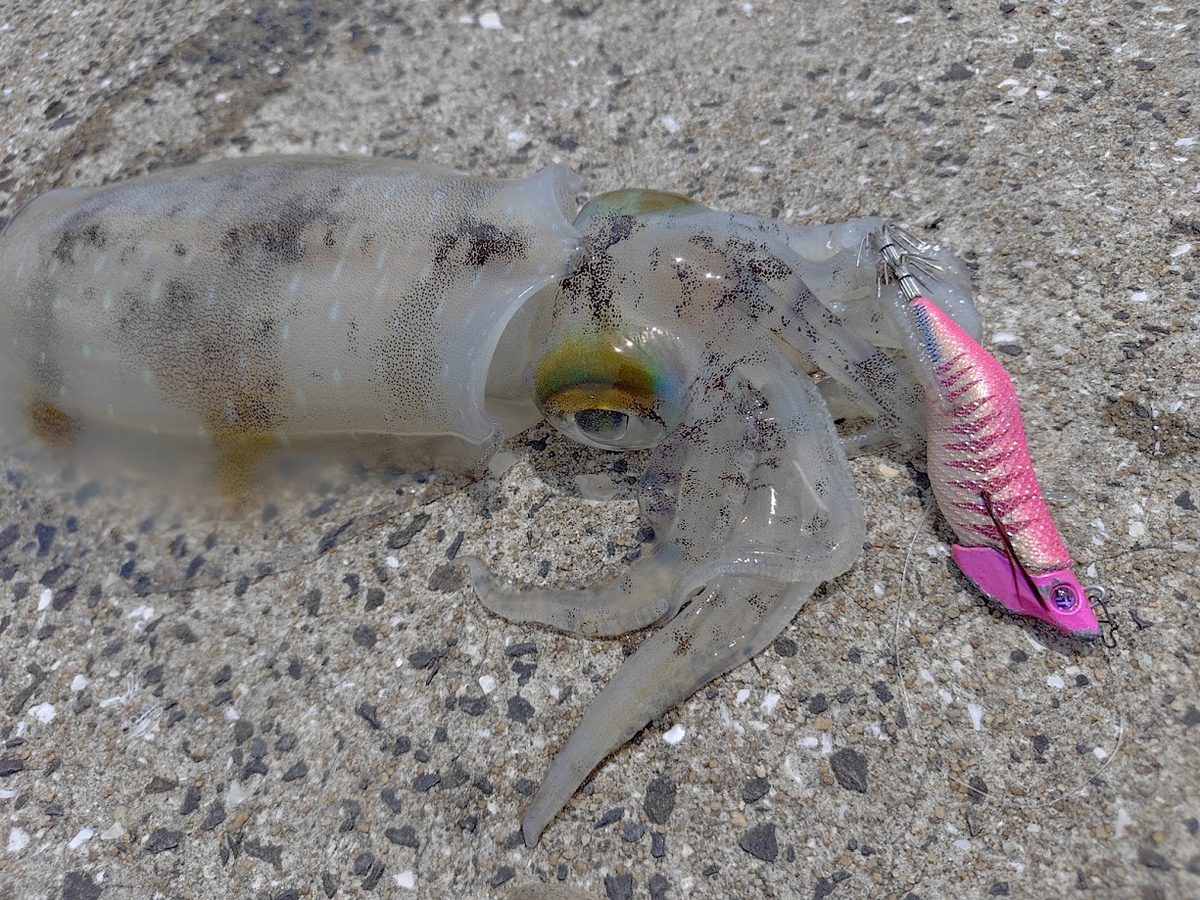
One from a high breakwater with current running.
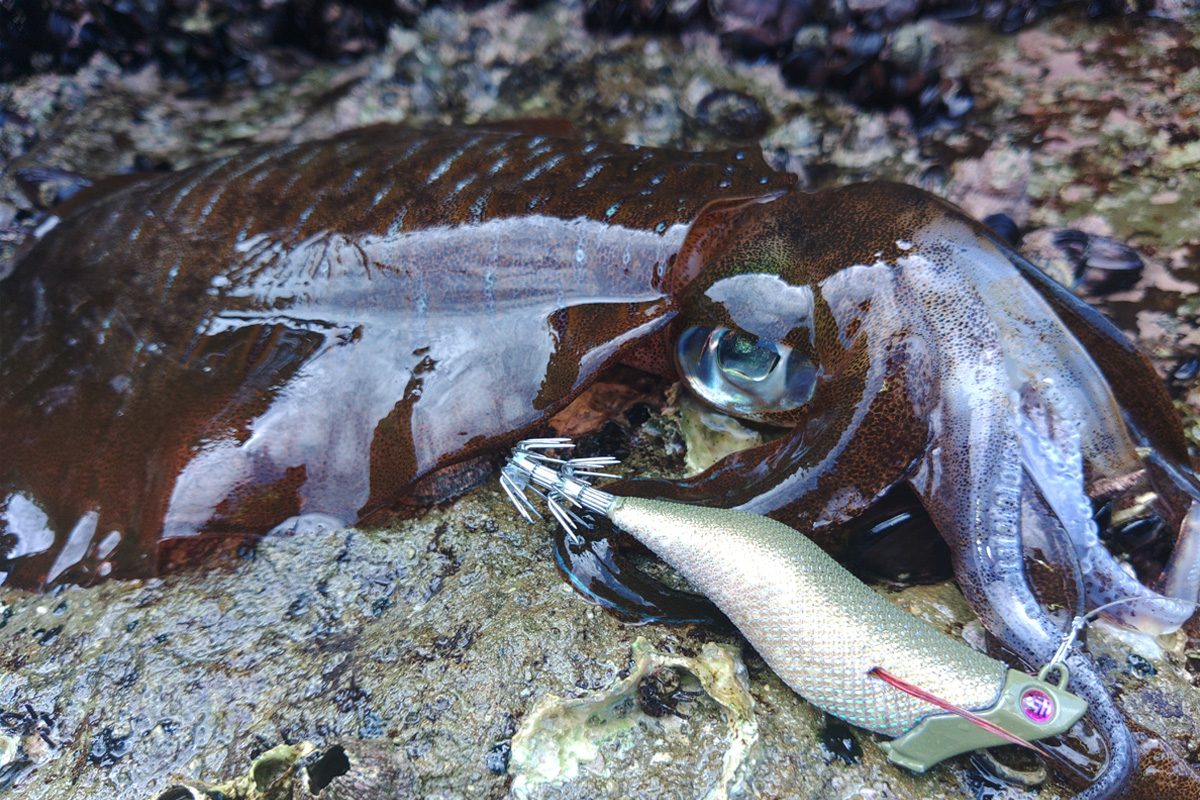
Around the rocks — depth and flow.
3. You do not have to start with a dedicated rod
To begin shore tip-run, you do not necessarily have to buy a new dedicated rod. That is not the same as saying any rod will do.
In Keystone's own fishing we use an 8.5 ft M-class rod, a 2500-class spinning reel and PE 0.6. If a rod casts 20–24 g without strain and lets you see the tip move, the eging or light-shore tackle you already own may well serve.
| Item | What we used | What to look for |
|---|---|---|
| Rod | 8.5 ft M class | Casts 20–24 g, and shows movement at the tip |
| Reel | 2500 class | A size that handles well for eging |
| Main line | PE 0.6 | A diameter that balances current against distance |
| Leader | Chosen for the place | Consider the bottom and where you stand |
Lure weight ratings differ from rod to rod. Always check the maker's rating for your rod, and do not force a cast.
4. Five steps
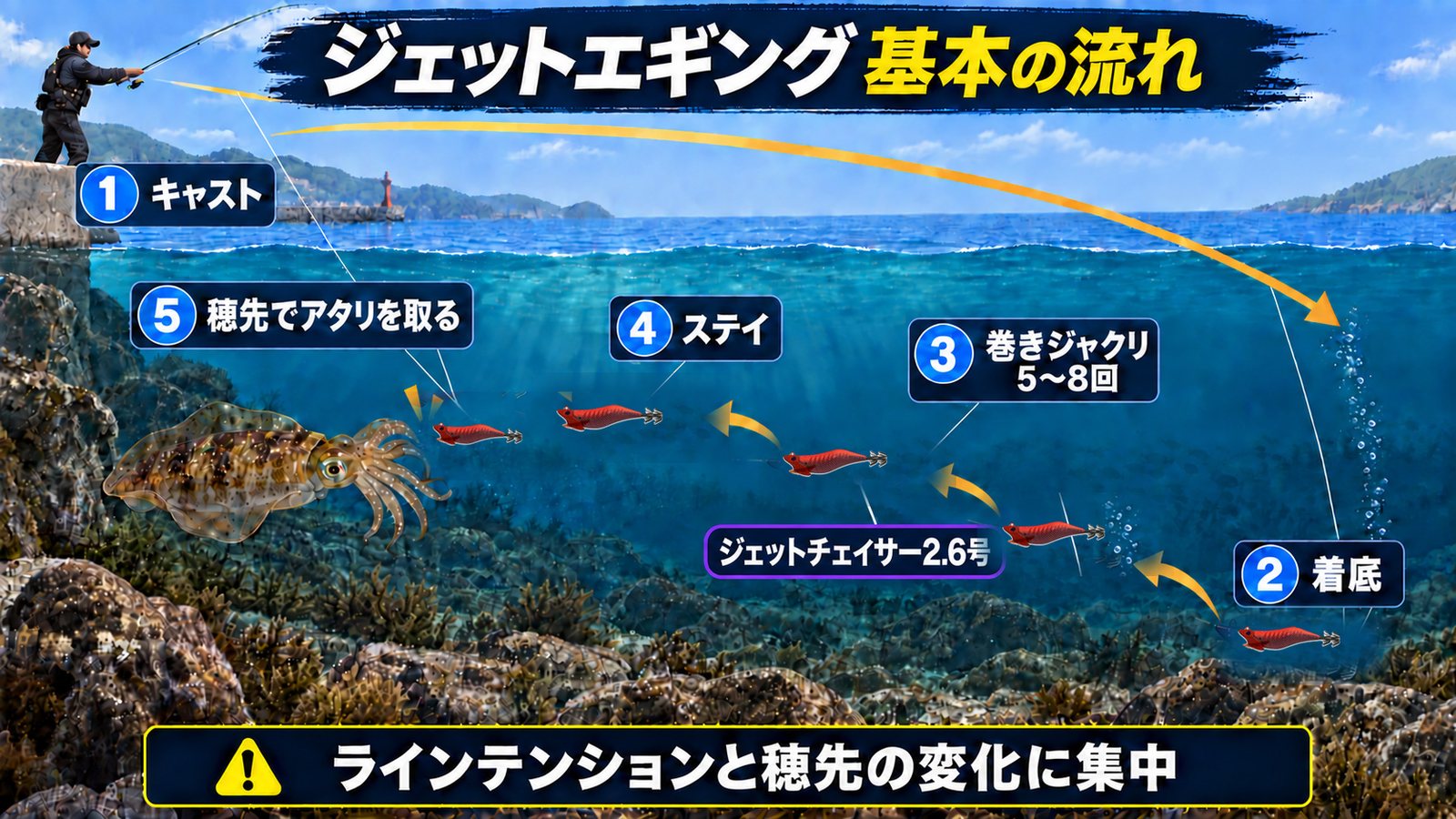
Cast → first touch on the bottom → wind-and-jerk → stay → read the bite at the tip — five of them. Hold the tension and watch only the tip.
-
Cast
Cast to the offshore break or beyond the current line. Once it lands, take up the slack so the wind has less hold on the line.
-
Check the first touch on the bottom
Touch the bottom once, at the start. The line stops, goes slack, or the weight leaves the tip: those are the signs.
-
Wind-and-jerk
Reeling as you go, jerk in small strokes, five to eight times. Rather than lifting it high, think of swimming it forward.
-
Stay
Stop the rod and hold tension so the egi settles. This pause is the moment that makes the squid take it.
-
Read the bite at the tip
The tip springs back, is pressed down, trembles, or the weight disappears — any of these can be the bite. When something feels off, do not let the line go slack; sweep into it.
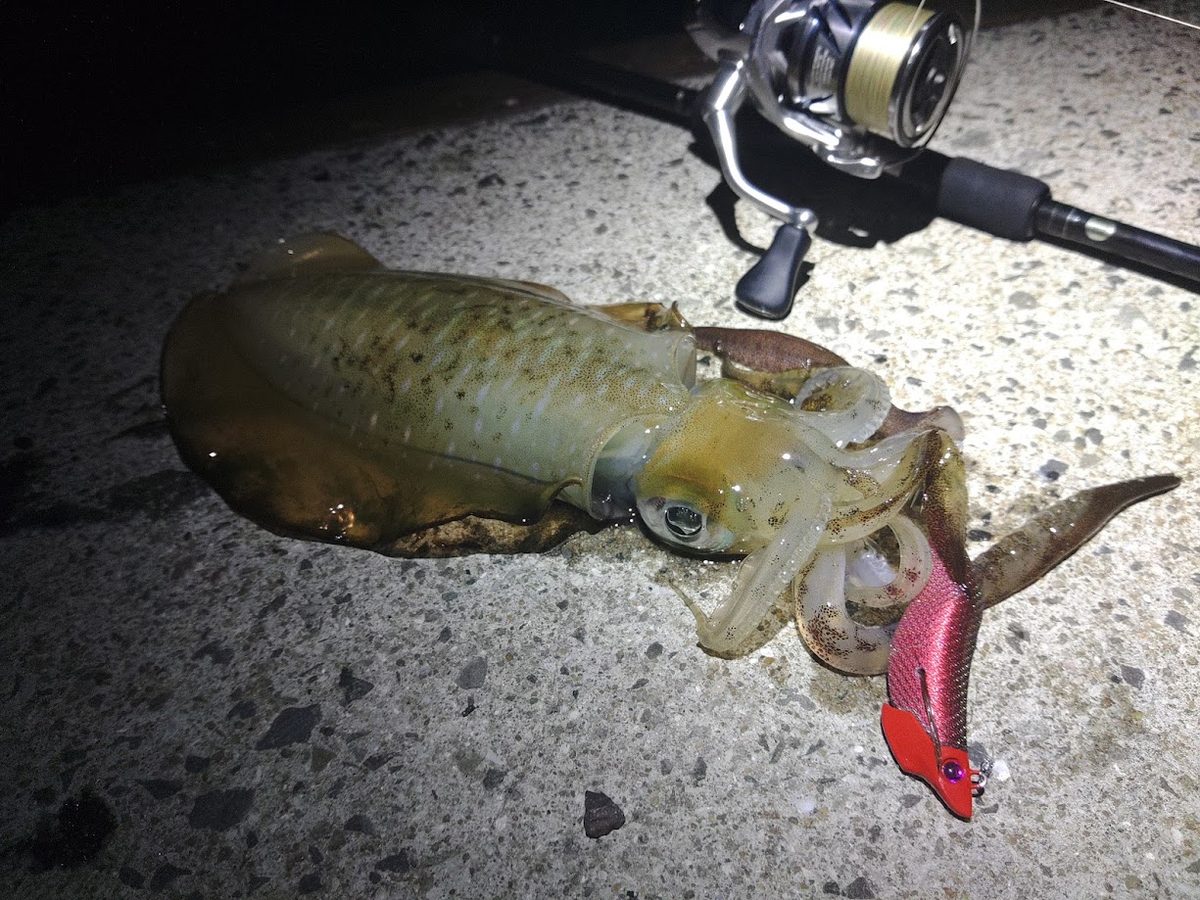
5. Take the bottom once, then search sideways
You do not have to drop it back to the bottom every time.
In shore tip-run you learn the depth on the first touch, then repeat wind-and-jerk and stay, carrying the chosen band a long way sideways.
Bigfin reef squid that are feeding will chase a moving egi, so there are times when giving them a distance to chase covers the water better than returning to the bottom each time.
When the current picks up, though, or when you lose track of where the egi is and how deep it runs, take the bottom again as needed.
It is not “never take the bottom”, but “do not go back to it more than you need to”.
6. Why the JetChaser
This fishing asks for two things that seem to contradict each other: sinking fast, and holding a steady posture during the stay.
The JetChaser carries 20–24 g in a small body, and uses the high buoyancy of its rigid urethane foam body to settle that body in the water.
1. A small body with 20–24 g
Keeping the silhouette small while carrying the weight makes it easier to deliver quickly into depth and current.
2. The buoyancy of rigid urethane foam
Weight alone does not give an egi its posture. The high buoyancy of rigid urethane foam is what balances the weight against the way it sits in the water.
3. The KS06 hook
All four sizes carry the KS06 hook. The body is in the 2.5 class, yet the hook is the size normally fitted to 3.5–4.0 class egi.
The design is set out in full in the JetChaser product specifications.
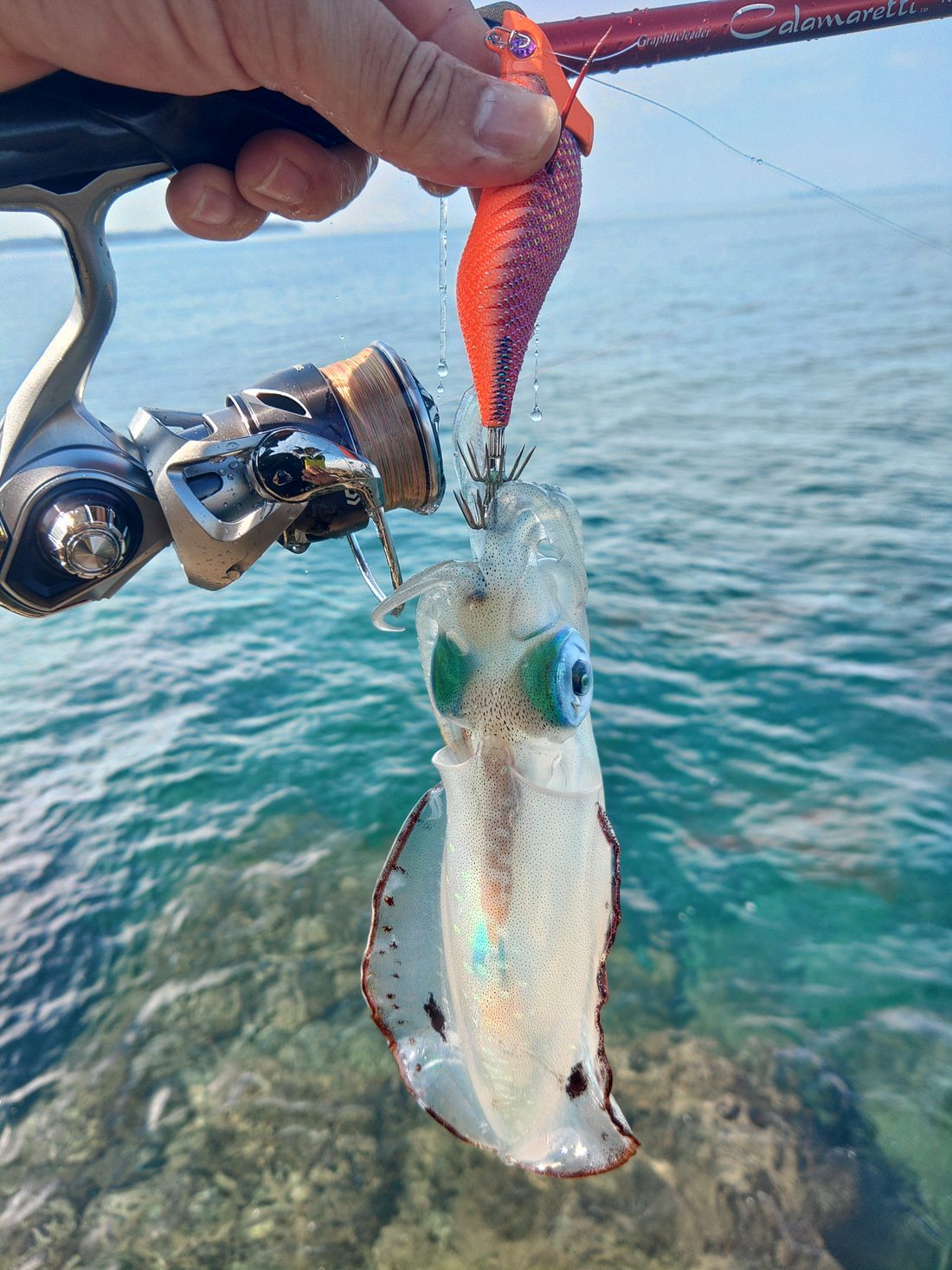
7. Choose among the four sizes by conditions, not by the size of the squid
You choose by depth, current and wind — and by head shape and buoyancy. There is no need to pick a size from the weight of the squid.
| Size | Weight | Head | Where it suits |
|---|---|---|---|
| 2.5 | 20 g | Takes the water on a face | Shallower water; casting and covering ground |
| 2.6 | 22 g | Cuts the water | The base size, from shallow to deep |
| 3.0 | 22 g | Takes the water on a face | When you want more body volume and buoyancy than the 2.5 |
| 3.1 | 24 g | Cuts the water | Depth, current, and getting into the band faster |
The 2.5 and the 3.0 have a head that takes the water on a face. It keeps the egi from coming back toward you too quickly after the cast, and suits a slower, more patient search.
The 2.6 and the 3.1 have a head that cuts the water. They are easier to handle where there is current, or when you want to get down into a deeper band.
The 3.0 and the 3.1 also carry more body buoyancy, which gives the larger size both presence and a steady posture.
When in doubt, choose from the depth, the speed of the current and the strength of the wind. It is not a matter of “this many grams of squid, therefore this size”.
8. What the autumn fishing showed
In early October 2025, fishing the Goto-nada off Saikai in Nagasaki, we searched from the shallows at our feet out to about 15–20 m, changing egi with the speed of the current and the depth.
While the current ran we covered ground with the JetChaser 2.5; when it eased, or in mid-water, we used the EGISHARP; and on the offshore break we went up in size.
Shore tip-run is not a denial of ordinary eging. It is one more option for fast current and deeper water.
From the day's fishing
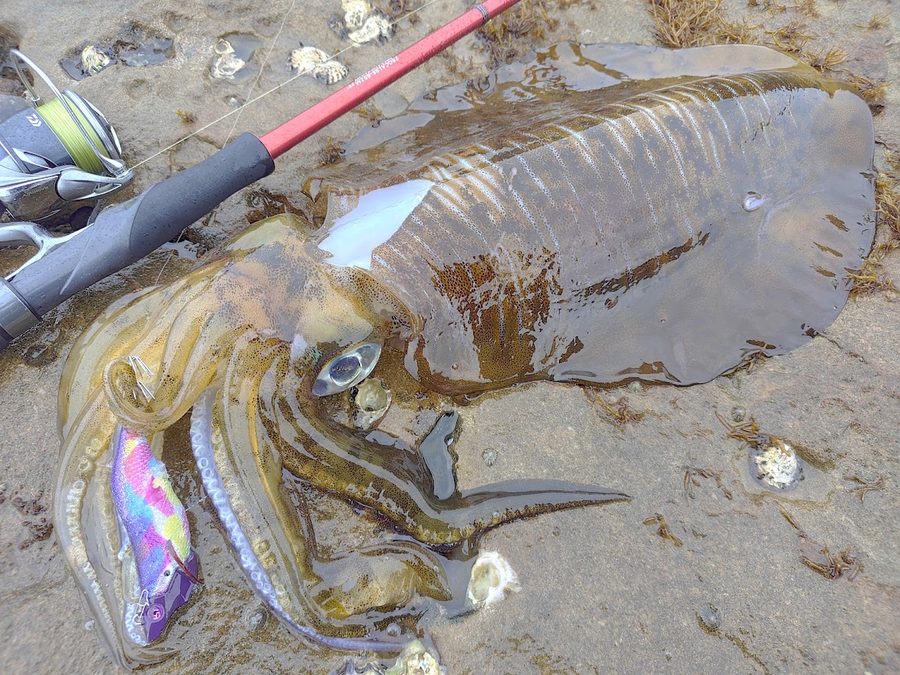
Taken at our feet, around the rocks.
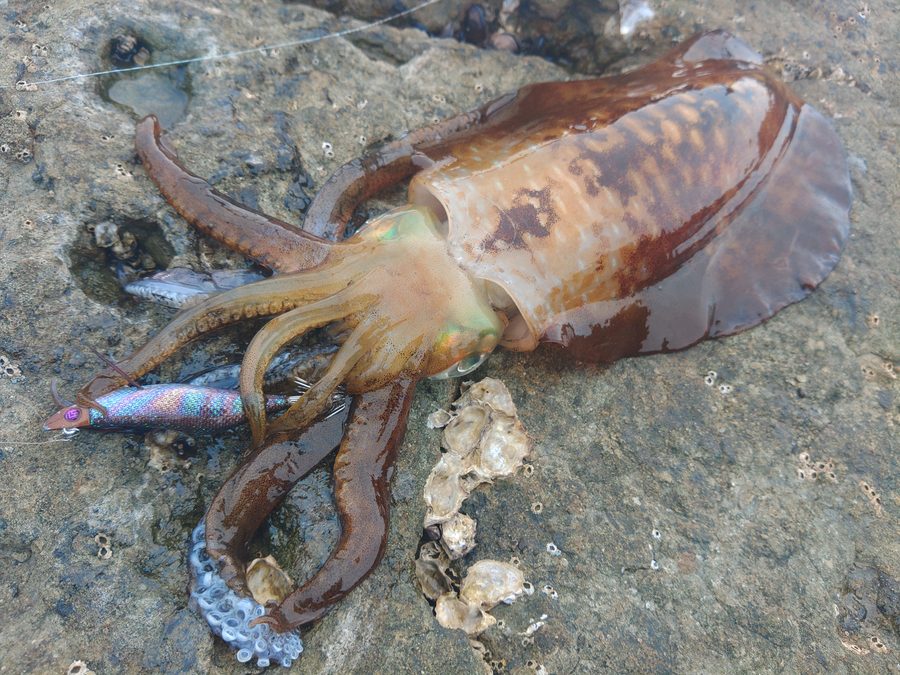
Daytime, on the rock.
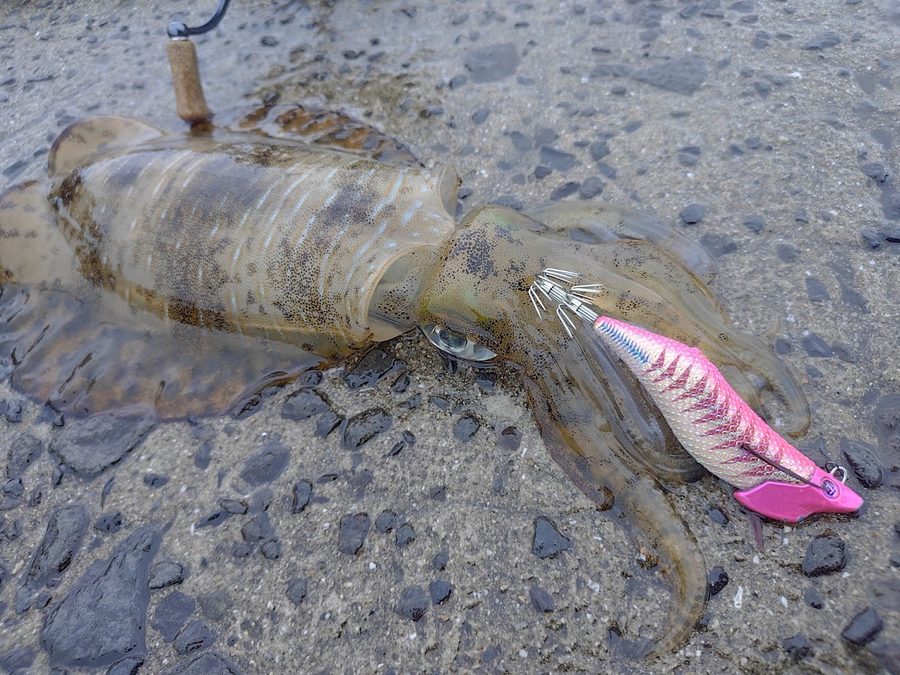
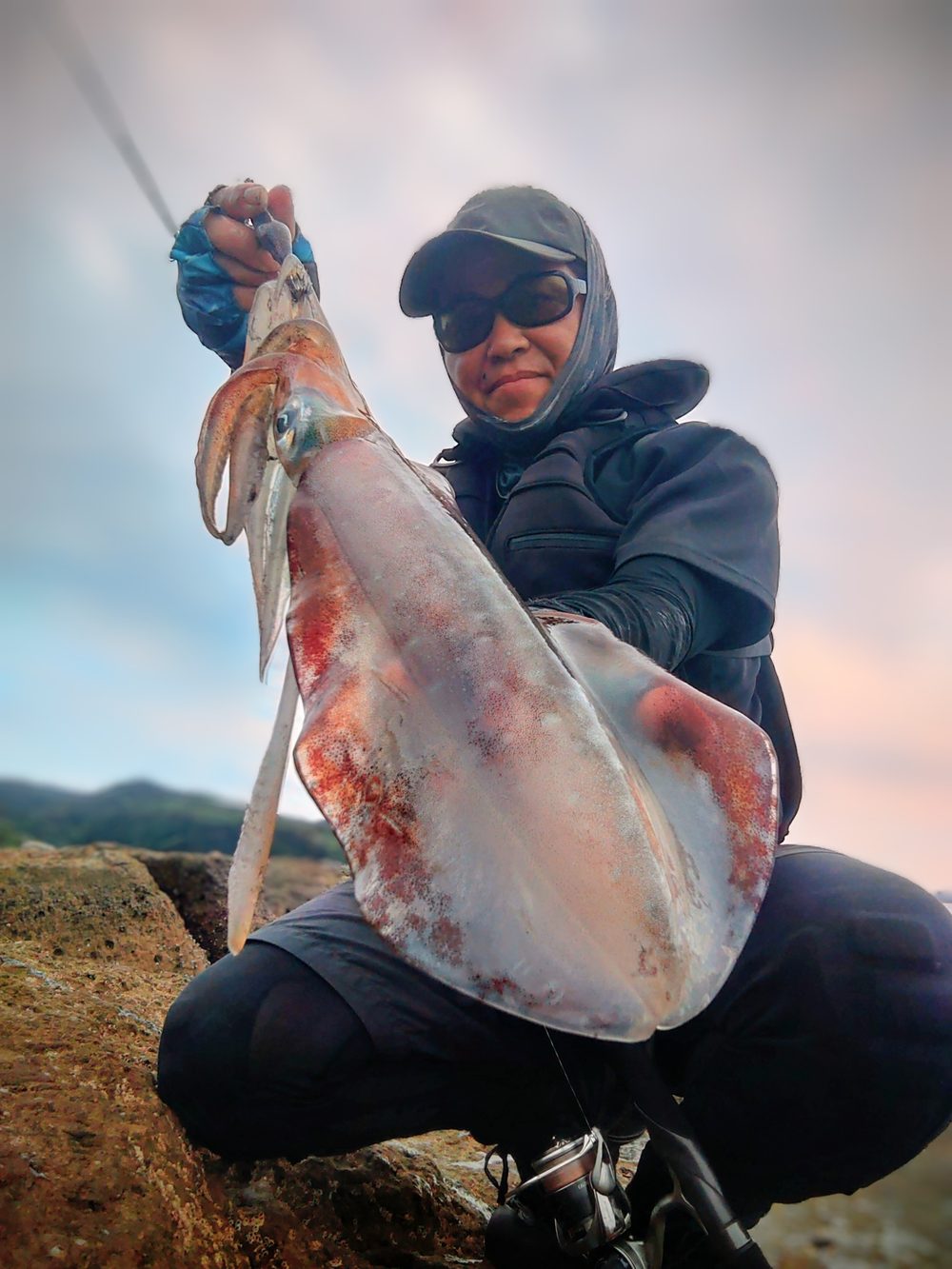
On the breakwater. The autumn class that makes the numbers.
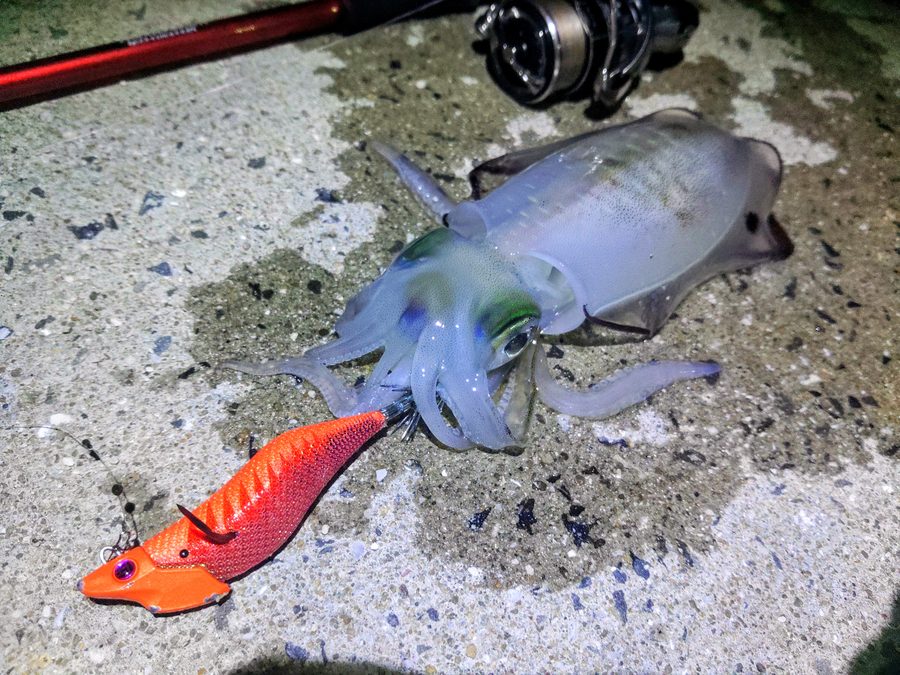
Rod down for a moment. Where the current passes.
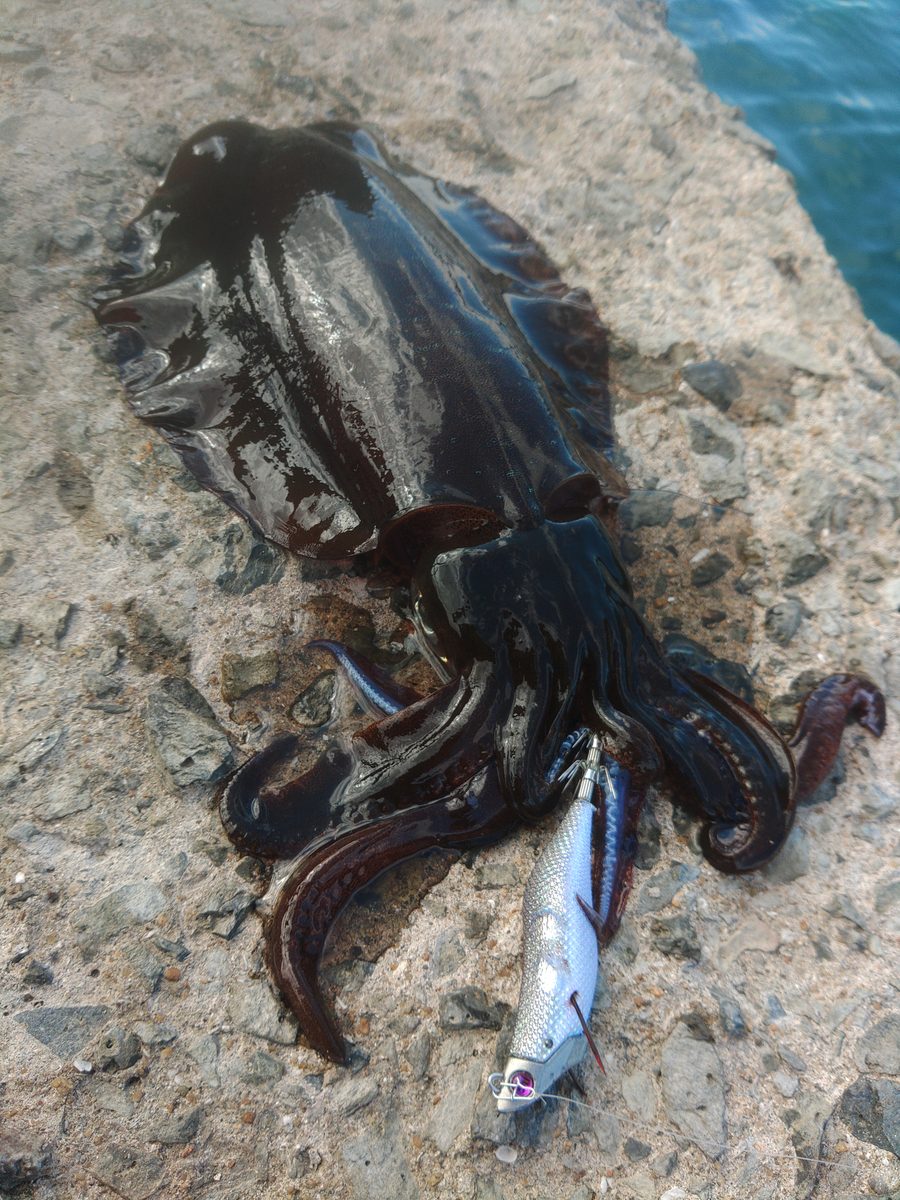
Evening on the rocks. It followed right to our feet.
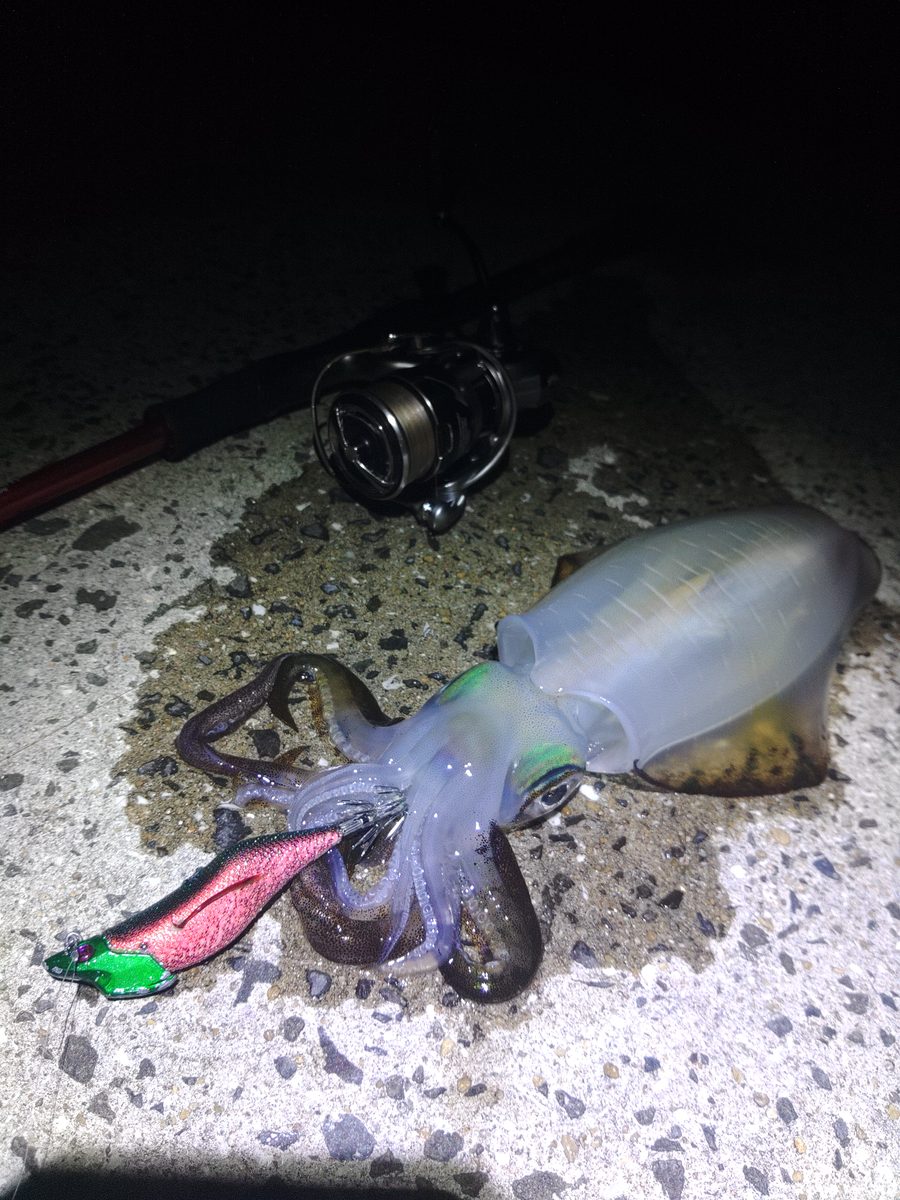
Night on the breakwater, under the light.
These are the results of that day. The Saikai / Goto-nada autumn eging report has the detail.
9. The same tackle — what that means
Built around an M-class rod, light shore jigging and shore tip-run can share tackle in some cases.
That does not mean chasing pelagics and squid at the same time, half-heartedly.
Fish the short morning window for pelagics, and switch to squid when the tide changes — or decide on squid from the start. The real advantage is that you can read the sea that day and choose, without carrying more gear.
The gear can be shared. The hours you fish for each are kept apart.
10. Frequently asked questions
Q. Do I need a dedicated rod for shore tip-run?
No. In our own fishing we use an 8.5 ft M-class rod, a 2500 reel and PE 0.6. If a rod casts 20–24 g without strain and lets you see the tip move, your usual eging or light-shore tackle may well serve. Always check the lure weight rating first.
Q. Do I sink it to the bottom every time?
As a rule you check the bottom once, after the first cast. After that you repeat wind-and-jerk and stay, searching the chosen band sideways. If the current changes and you lose track of the egi, take the bottom again as needed.
Q. How does it differ from ordinary eging?
The difference is the sink rate and the way the band is held. Shore tip-run uses a relatively heavy egi and gets it quickly into depth or current. It also puts weight on holding line tension after the jerk and reading the bite at the tip.
Q. Which JetChaser size should I start with?
Choose from depth, current and wind. For covering shallower ground, the 2.5; if you take one size to begin with, the 2.6; when you want body volume and buoyancy, the 3.0; for depth or fast current, the 3.1. There is no need to decide by the weight of the squid.
Q. What kind of places suit it?
Breakwaters and rocky shores with depth, places where the current passes, high vantage points, and places exposed to wind. Conversely, in very shallow water or over weed and rock it can sink too fast, so watch for snags.
Q. Can I use the same rod as for light shore jigging?
If the specification matches, yes. But some light shore jigging rods have a stiff tip, and the ratings differ from model to model. Along with casting 20–24 g safely, judge it by whether you can see the small movements during the stay.
This fishing, and the way this page is built, came from Tsutsumi, Keystone evangelist. The tackle and the handling described here follow his own fishing. KEYSTONE EVANGELIST "TSUTSUMI"
Shore tip-run, with the JetChaser.
2.5, 2.6, 3.0, 3.1 — four sizes to choose from, by depth, current and wind.
See the JetChaser product page Read the autumn report

