


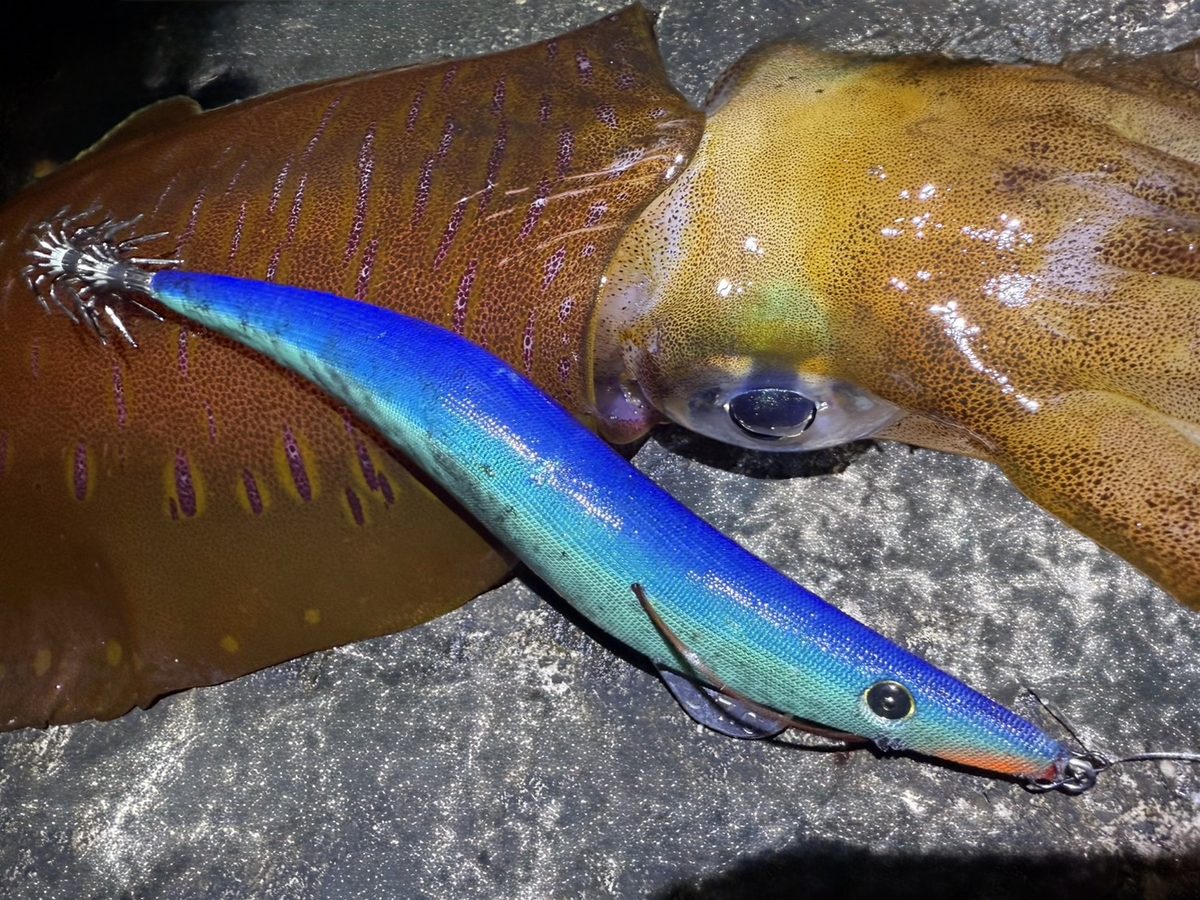
The size 4.3 just can't be controlled
The condition on this day: a 7 m/s crosswind.
Normally I'd build my approach around the 4.3. But in this wind, the line gets taken and the feel of the egi never settles. Even when I put in a jerk, I can't tell whether the action I intended is actually happening.
A 7 m/s crosswind.
With the size 4.3, the feel won't settle.
Here, I change the choice. ── Harada / Keystone Field Tester
The weight of the 7 masters the wind
So the one I sent out was the Egi Oita Purapura 7.
With the weight of the 7, line control holds even in a crosswind. The feel comes back.
Why the 7
Wind countermeasure through weight ── the heavy body delivers line control that doesn't lose out to a crosswind. The feel stays stable.
Stable fall orientation ── thanks to KEYSTONE's proprietary balance design, it falls naturally while holding a stable orientation even with the added weight.
On a windy day, the idea isn't to "drop down in size" but to master the wind with weight. The merit of a big egi isn't just its silhouette.
A tension fall placed on the tide line
Ten minutes in. A tide line runs from offshore on the right toward the shore. The angler ahead of me hits.
Soon a tide line stretches out right in front of me too. I cast toward that tide line. I show it carefully with a tension fall.
In that instant ── the line snaps taut, a clear bite.
Because the body is big, I deliberately pause for about two seconds. Then the hookset.
Right after, the drag screamed all at once.
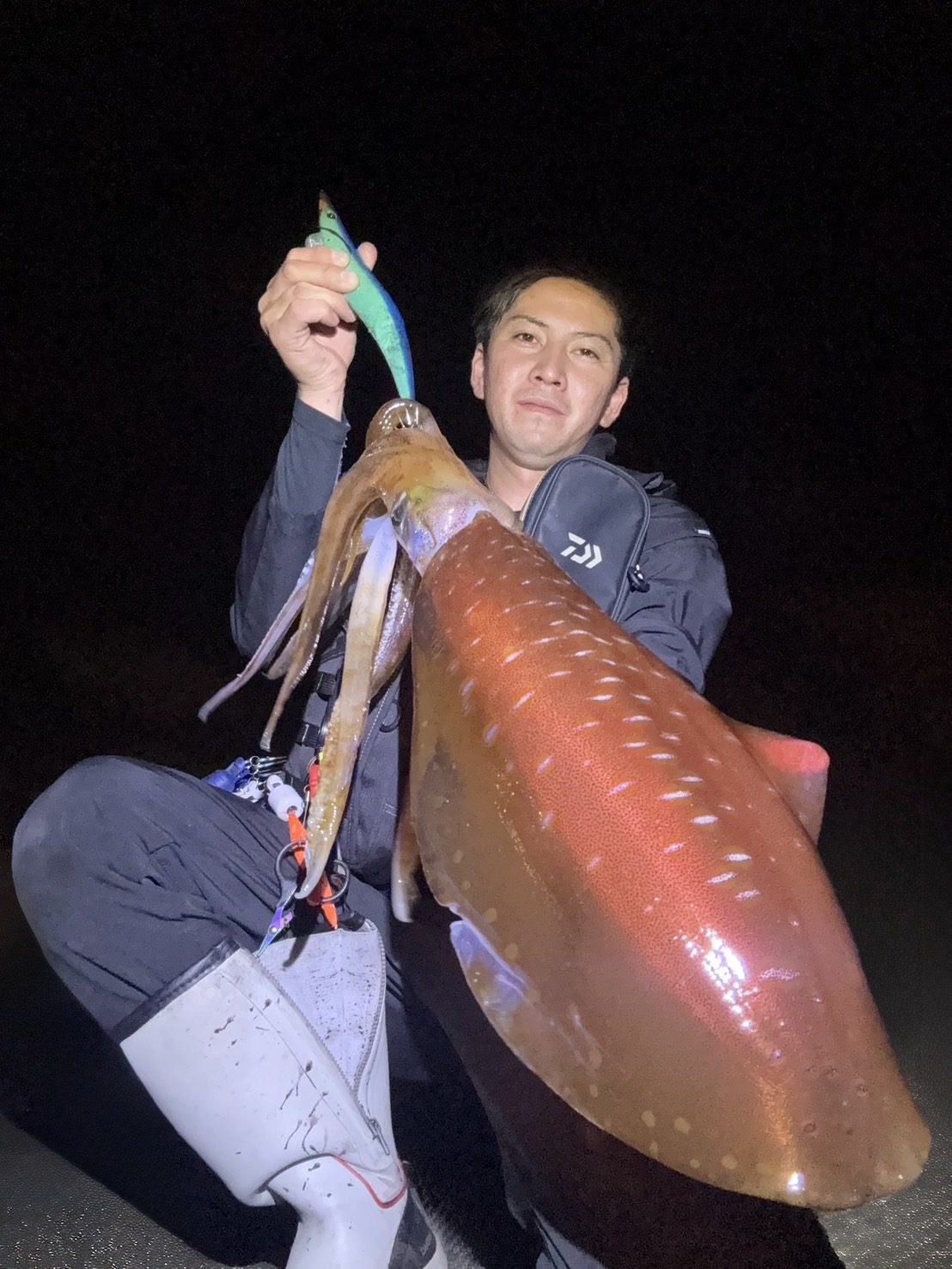
After all,
a big egi means a big squid.
Analysis ── choosing an egi on a "windy day"
On a strongly crosswind day, many anglers focus their attention on casting accuracy. But what truly matters is the feel after the cast.
No matter how accurately you cast, if the line gets taken by the wind during the fall, the precision of the tension fall drops. You can't detect the bite either.
The weight of the 7 solves this problem simply. The weight aids line control and lets you maintain the intended fall orientation even in a crosswind.
And the silhouette and wave action of the 7 make its presence unmistakable even to the large individuals cruising the tide line.
A 7 you can work solidly even in a crosswind. A fall orientation placed on the tide line. It was one squid where every bit of timing clicked together.
Egi Oita Purapura Q&A
On a strongly crosswind day, the line gets taken by the wind and the feel of the egi is easily lost. When the usual size 4.3 is too light, choosing a weighted egi like the Egi Oita Purapura 7 secures a stable feel even in the wind.
The basic pattern is to cast toward the tide line and show the egi carefully with a tension fall. The weight of the 7 lets you keep it in the target range without losing out to the current. Because it's also a route where large individuals cruise, a strategy of asserting presence with a big egi is especially effective.
Because a big egi has a large body, it can take longer than usual for the squid to fully grab the egi. Even when you get a clear bite, deliberately pausing for about two seconds before hooking sets the barbs securely.