


"Draw It Quietly. The Squid Will Answer."
── This is surface-draw eging.
Time does not return.
And yet, the way of the squid comes around again.
Tonight, the moon quietly lights the sea.
The waves speak not; only the light falls upon the open water.
April 5 — a moonlit spring tide. Shore eging on the Kitaiso. I stand on a 3m-deep rocky shallow area.
The world today is the age of jerking. Deceive with motion, and catch squid. But — do not forget the way of stillness.
Cut through the surface, chase the shadow, read the presence. An age-old art — that is surface-draw eging.
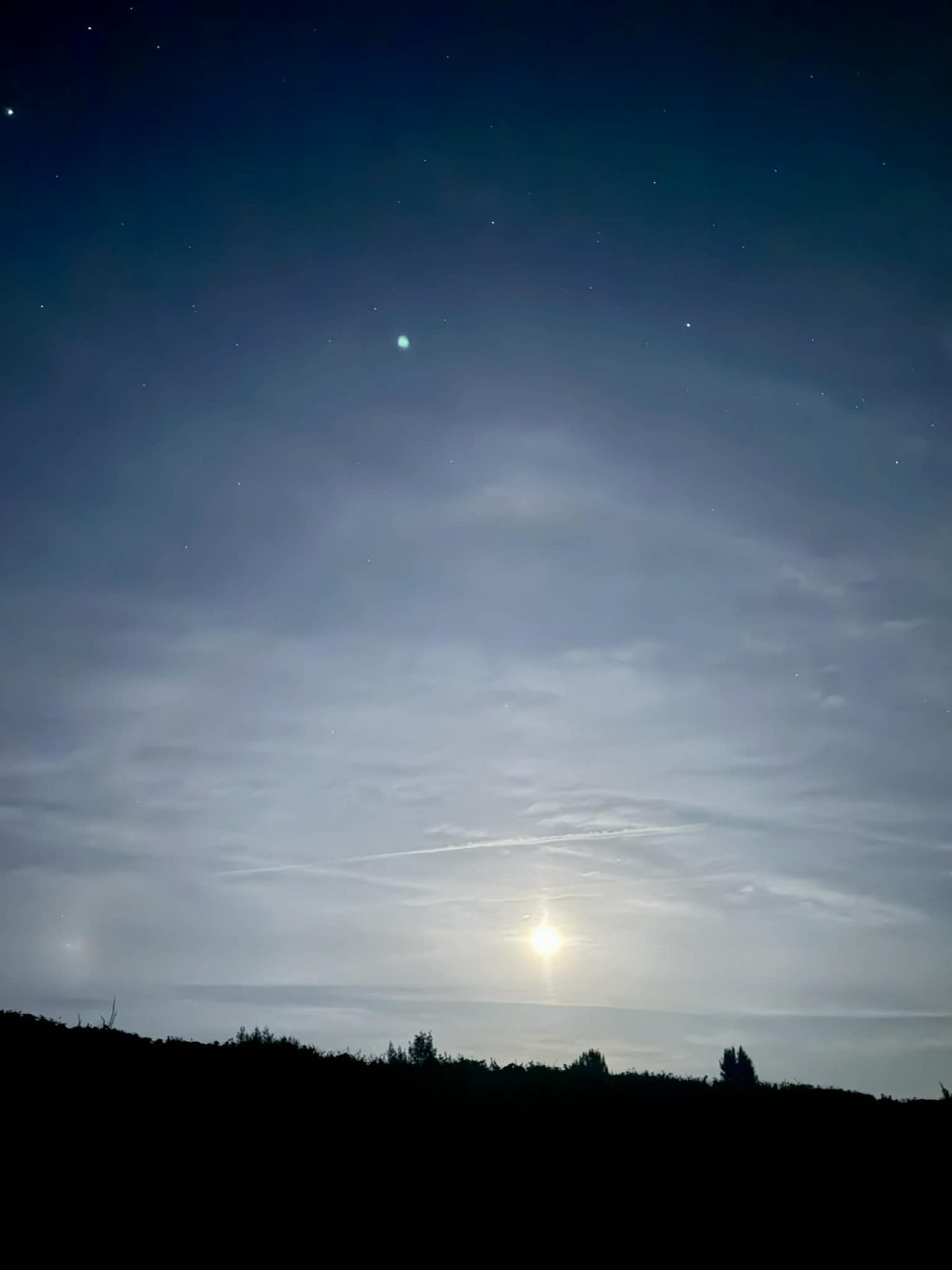
The Goto-Type Egi — a silent blade adrift in the moonlight
The Goto-type egi, adrift in the moonlight. It simply cuts quietly through the surface.
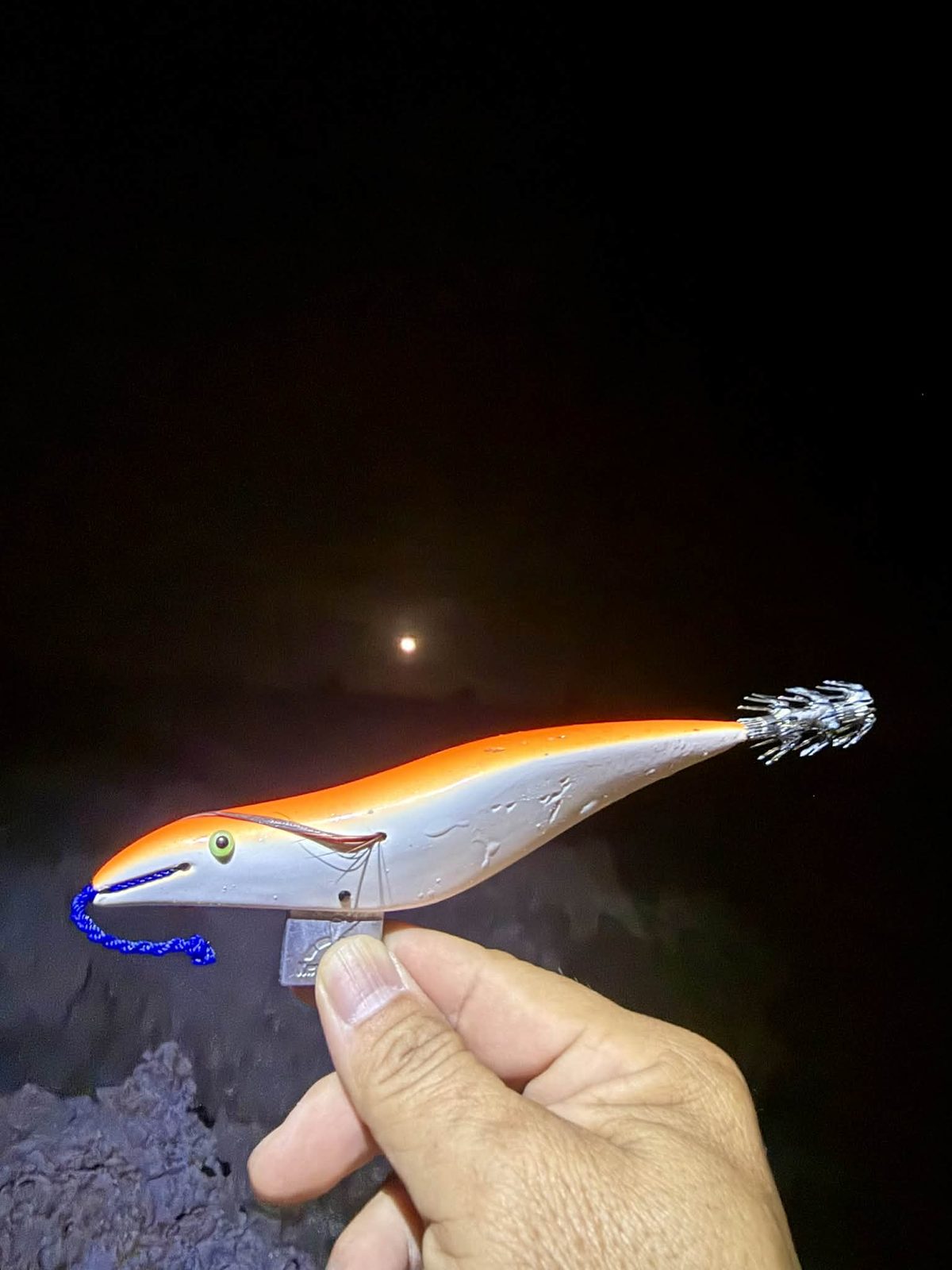
The Goto-type (gotogata) — an egi (squid jig) designed for slow, horizontal retrieves, long used in the Goto Islands. Its form is optimized for horizontal movement, designed to glide quietly just below the surface. It is a tool born from a fundamentally different philosophy than an egi made for jerking.
Stillness is the way.
When the two become one,
the closed gate opens now.
Field & Tackle
Date & Time
April 5 Moonlit spring tide
Field
Kitaiso shore
3m-deep rocky shallow area
Egi Used
Surface-draw egi, Goto-type
Method
Surface-draw eging
Slow retrieve + stop
Now then, let us go.
On this day, there was no reaction to a normal egi, and none even when I switched to a big egi to show a larger silhouette. So I thought — rather than the jerking action, how about the quiet draw? — and I cast, slow-retrieving. I committed fully to enticing them with quiet horizontal movement.
Slow-retrieve, and stop from time to time. By stopping, the egi rises on the pause — the opposite of a jerking fall — and lures as it climbs.
Squid that won't react to jerking have their switch flipped by this horizontal movement and rises on the pause.
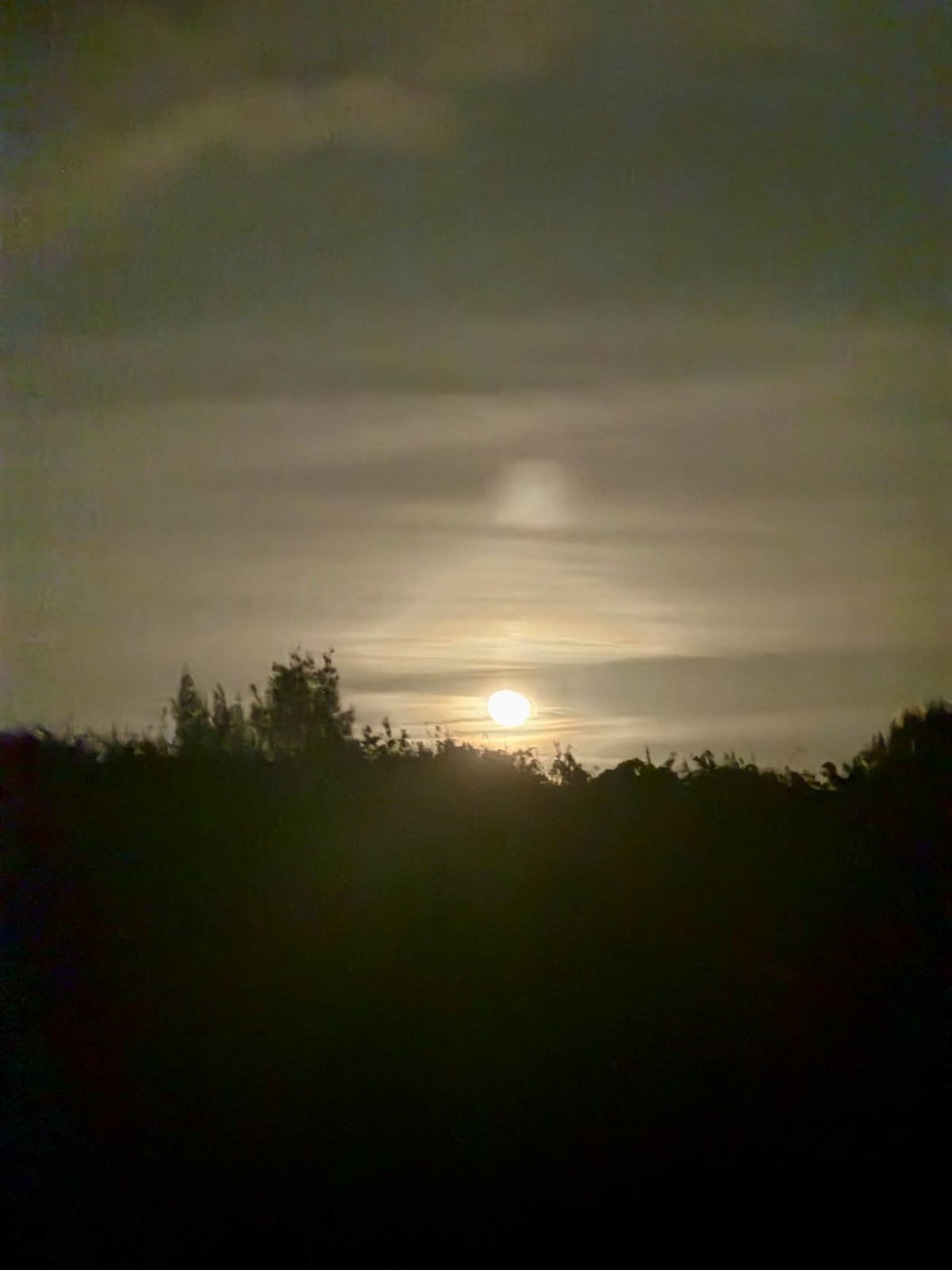
A hit mid-retrieve — a solid, forceful bite
This time it was a hit mid-retrieve. A solid, forceful bite, and right after the bite it grabbed the egi and ran.
Timing it well, an instinctive hookset landed, and then the squid ran sideways as if gone mad.
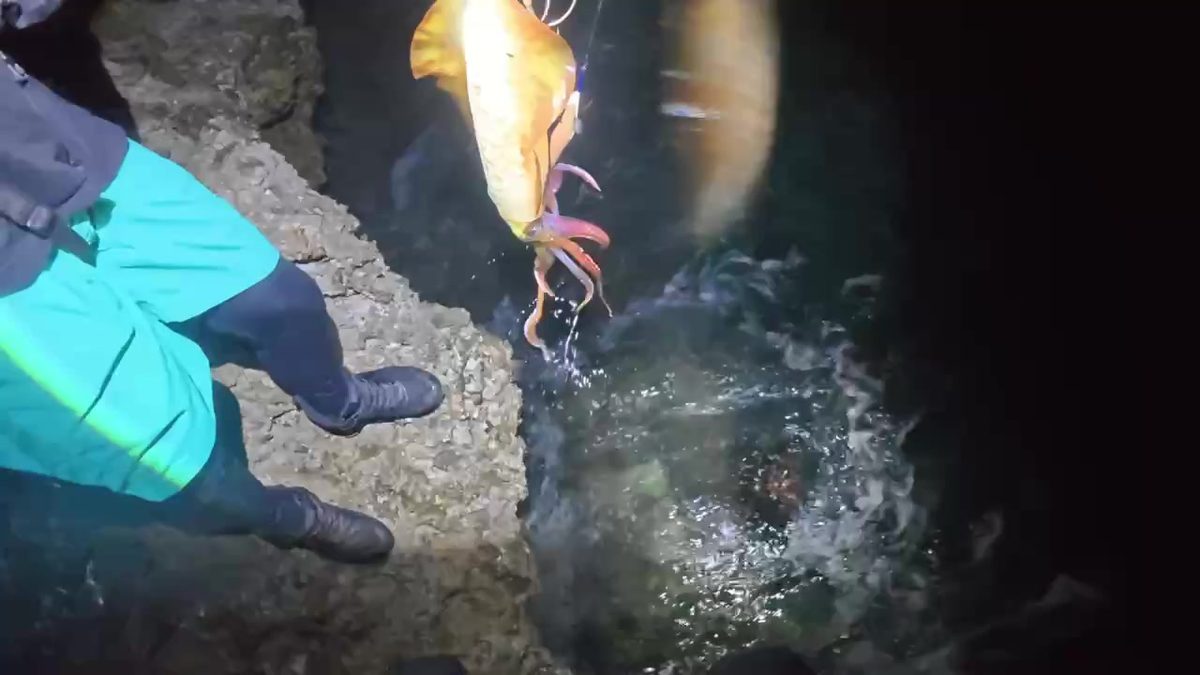
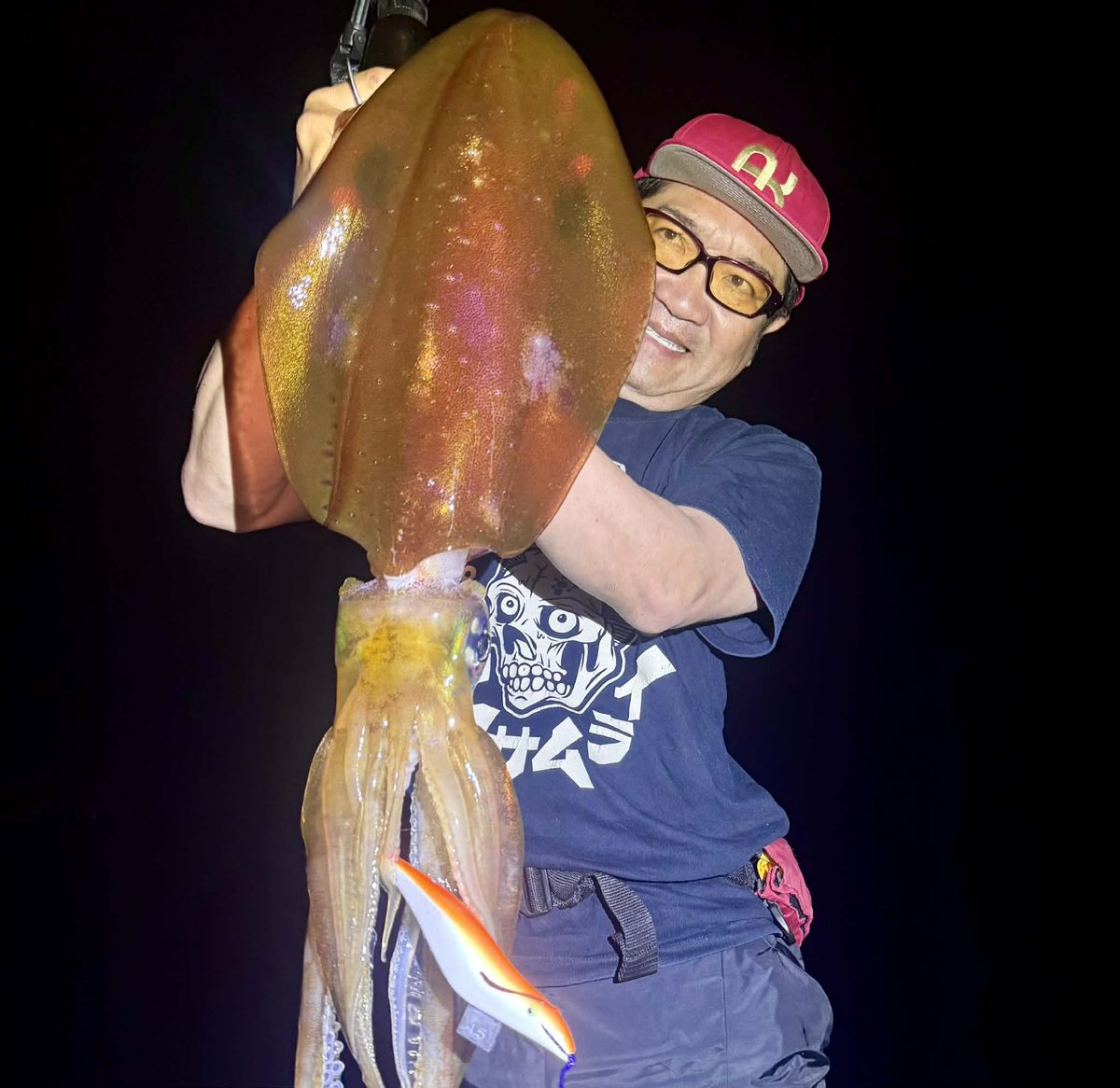
The Goto-Type Egi and the Squid — the proof
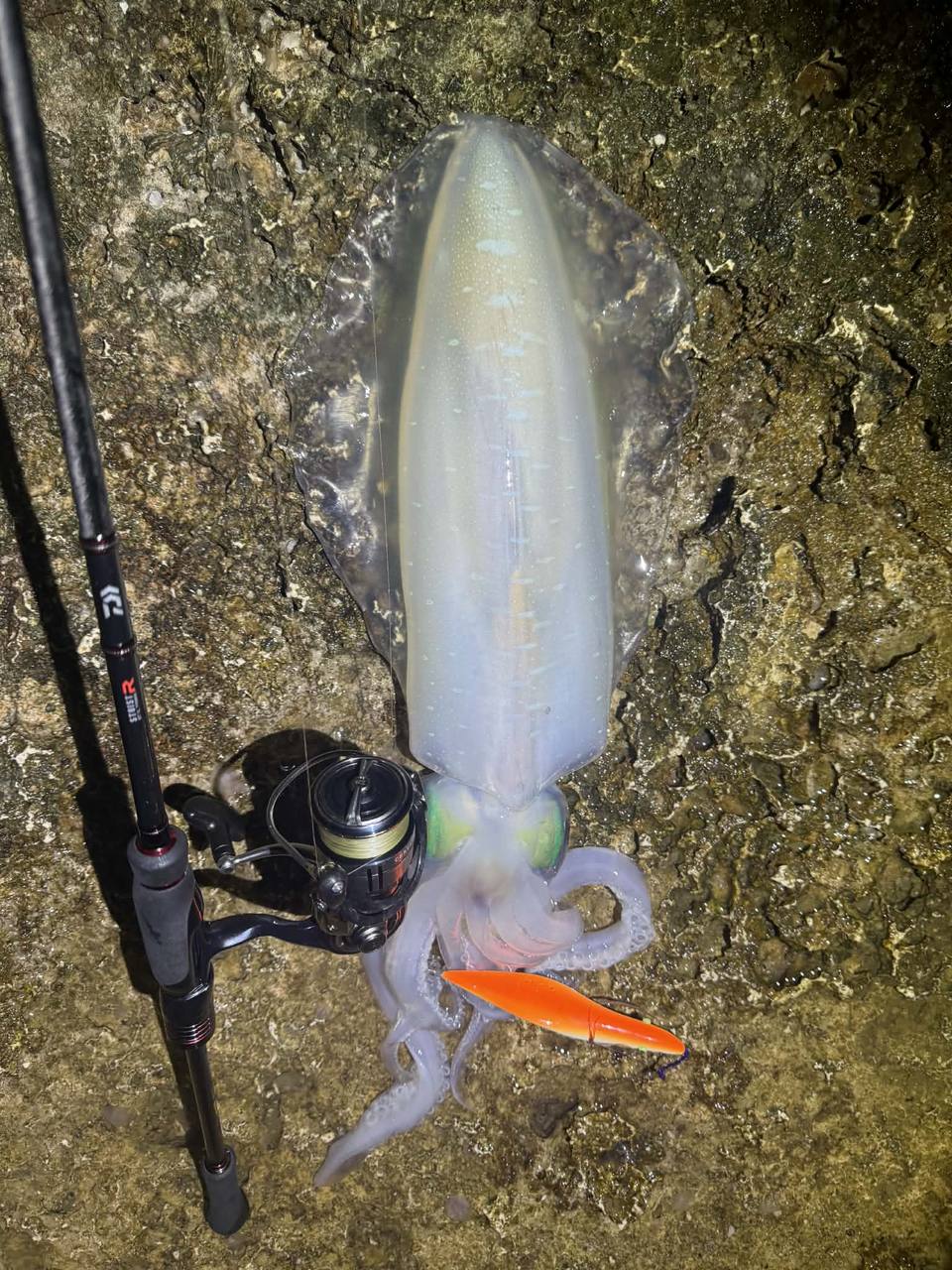
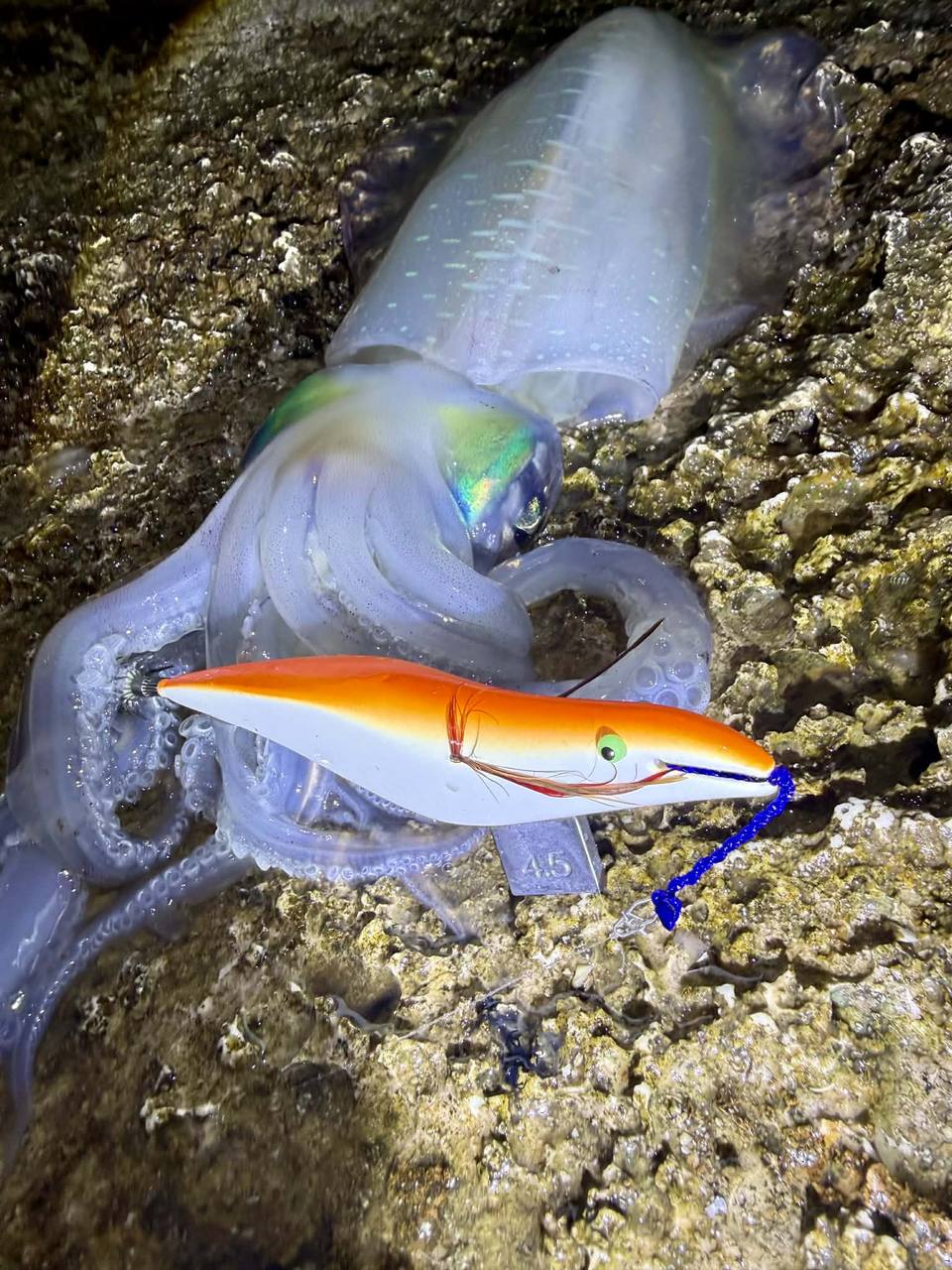
Surface-Draw Eging — the hit pattern
Action
Slow retrieve
Commit fully to horizontal movement. Stop from time to time. On the stop, the egi rises on the pause to lure.
The moment of the hit
A solid thump mid-retrieve
Right after the bite it grabs the egi and runs. An instinctive hookset.
It is exactly on squid that won't react to jerking that this horizontal movement and rises on the pause works. It shows its power not only in shallow areas but also at normal and deep-area depths.
What Is Surface-Draw Eging — the technique of motion and the way of stillness
Modern eging is dominated by jerking. Sweep the rod, snap the egi up, and induce a grab on the fall. Deceive with motion and catch squid — that is "technique."
Surface-draw eging, on the other hand, is based on slow retrieve. The egi is moved quietly and horizontally just below the surface, with an occasional stop. By stopping, the egi rises on the pause, luring the squid with the exact opposite action to a jerking fall.
Surface-draw eging shows its power not only in shallow areas but also at normal and deep-area depths.
An age-old art of the Goto Islands. That is surface-draw eging. Those who know both paths — motion and stillness — can truly be called eging anglers.
Surface-Draw Eging Q&A
Q. What is surface-draw eging?
A. It is an age-old method that lures squid by moving the egi horizontally with a slow retrieve rather than with jerking. A Goto-type egi is drawn quietly just below the surface, triggering a reaction from squid with horizontal movement and occasional stops (a lift on the pause). It is especially effective on squid that won't react to jerking.
Q. Is surface-draw eging only for shallow areas?
A. No. It shows its power in shallow areas, but it is also effective at normal depths and in deep areas. Through horizontal movement and a rising action on the pause, it works on squid that won't react to jerking.
Q. Why is a moonlit spring tide suited to surface-draw eging?
A. During a moonlit spring tide the tidal movement is strong, and the moonlight influences squid activity. Drawing the egi just below a moonlit surface makes the squid more aware of the surface. The spring tide's current adds natural motion to the egi, allowing a more effective appeal.